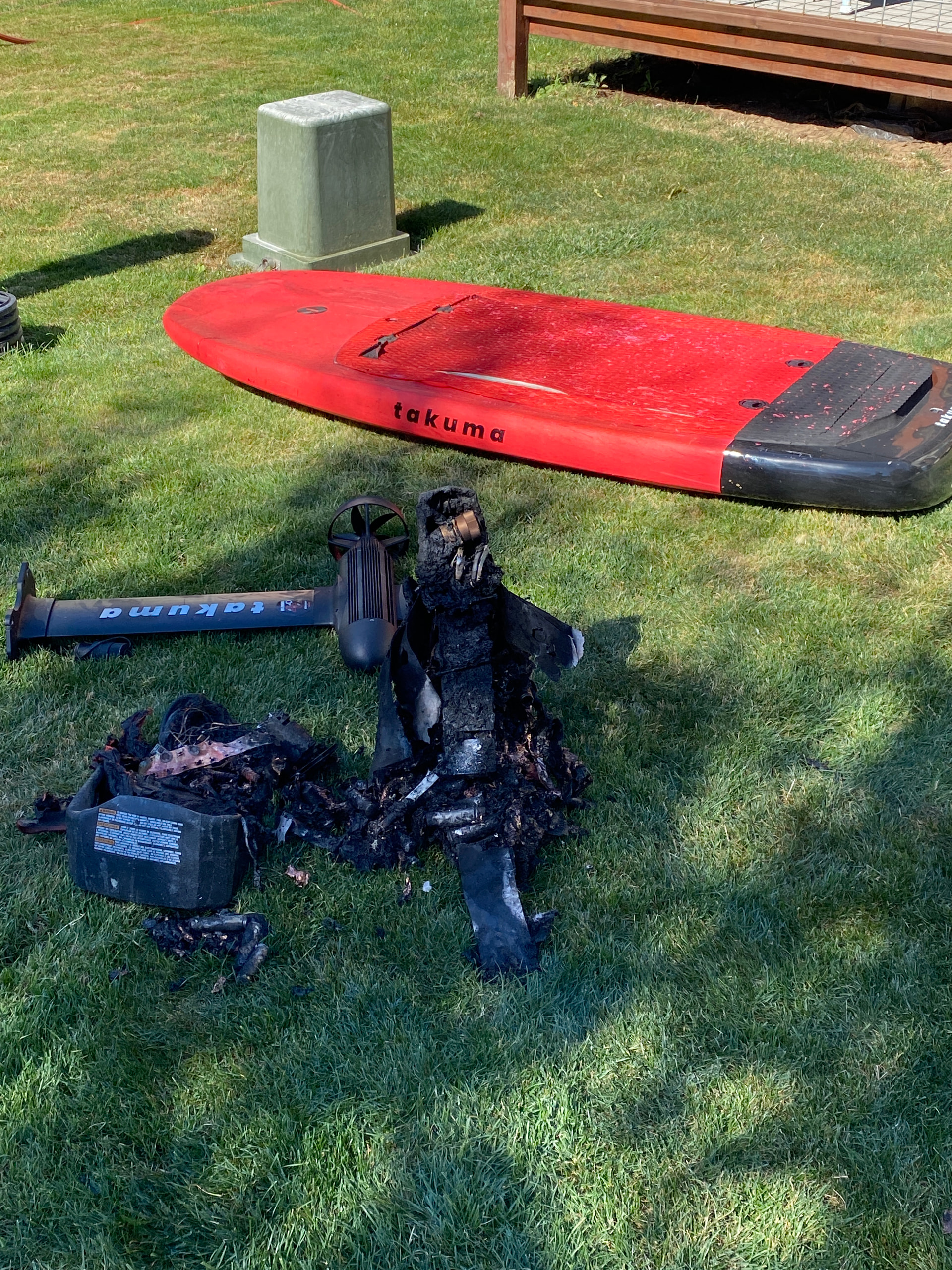
They are Lipo, the charging sleeve isn’t needed for other chemistries.
Can’t remember where, but the Lift founder was on a podcast shortly after the launch of the Gen2 saying he couldn’t believe the FD went to market with Lipo batteries.
They are Lipo, the charging sleeve isn’t needed for other chemistries.
Can’t remember where, but the Lift founder was on a podcast shortly after the launch of the Gen2 saying he couldn’t believe the FD went to market with Lipo batteries.
They’re certainly lithium-ion, which is not to say that slappy isn’t wrong. They are called LIPO bags regardless of what goes in them 
Lithium-ion are more stable, but if they have a chain reaction failure the outcome is extremely dangerous.
Very long video from ebike manufacturer on what the causes are which I found interesting, key points below. Most of the fires seem to be due to cheap cells, which FD doesn’t use.
Very glad the battery failure did not turn out worse (!) and also just wanted to add one other thing (only because I did not see it mentioned above.)
When we are storing FoilDrive batteries, FoilDrive says that we should ideally double check that the storage charge is 30-50%. This is one of the reasons to have something like the FoilDrive Inline battery checker
@adad
Do you remember the charge you left it before storing?
And what was your typical way you used the battery?
Did water actually get inside your unit?
Yeah, pretty scary. That happened to a buddy of mine here in Hood River, with his Efoil gear a couple years ago.
PA120 40mm Ammo Can Holder Box (Matte Olive Drab) - Waterproof Metal Storage Box w/Front Metal Latch, Swing-Out Handle – Ideal Ammo Can Surplus, Tools & Emergency Supplies Amazon.com: PA120 40mm Ammo Can Holder Box (Matte Olive Drab) - Waterproof Metal Storage Box w/Front Metal Latch, Swing-Out Handle – Ideal Ammo Can Surplus, Tools & Emergency Supplies : Sports & Outdoors
Do we need to do any sort of modifications to this to allow venting, or can we just put the batteries in it and seal it shut?
I’m no expert about this. I used to think sealed up meant no oxygen thus no fire but googling that shows that lithium ion are self oxidizing so they don’t need oxygen. I like the ammo box, if for nothing else makes me feel like I’ve at least tried. I just figure as long as I either use mine or check on them about every two weeks I “hopefully” have time to detect an issue, but who knows I could also get eaten by a shark while I’m foiling. Still beats sitting on the couch worrying about it.
there are some indications that people are removing the seal or drilling some vent holes but no actual evidence to it being necessary
Thank You.
Another good(and cheap) box option would be finding an old electrical panel at your local scrapyard and taking the guts out of it. The outdoor models even have hinged lids. They come with plenty of ventilation.
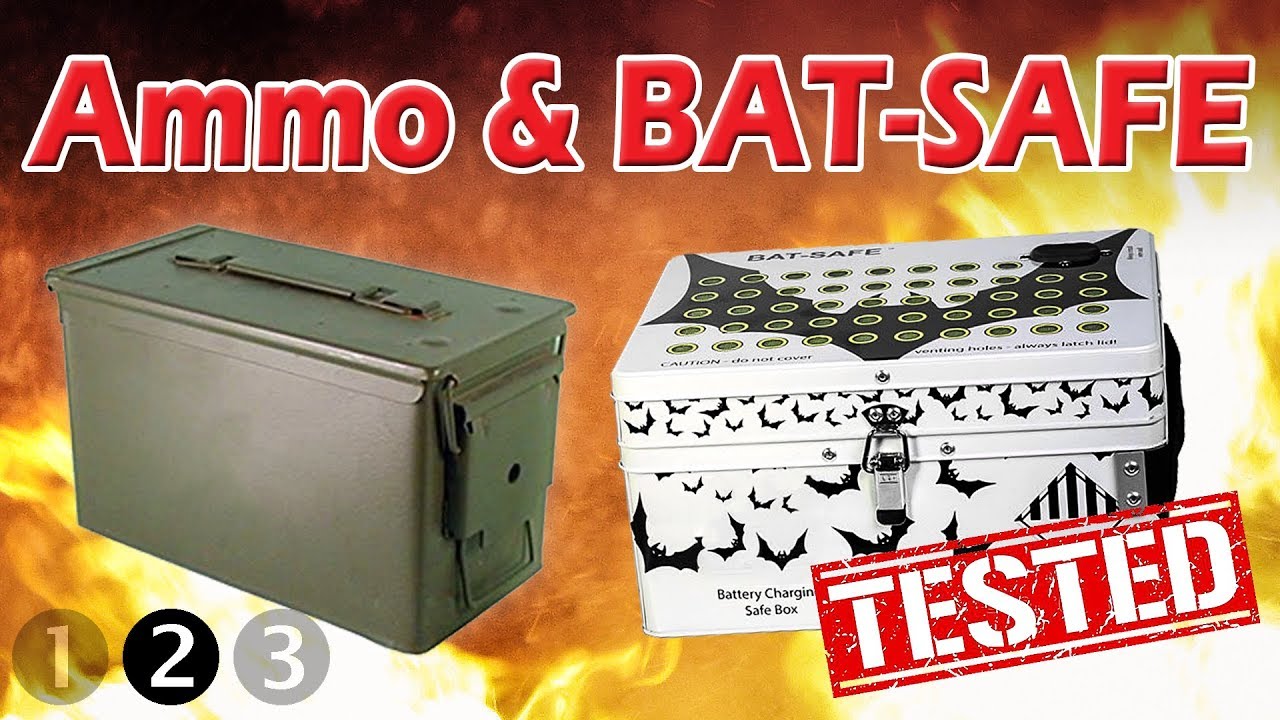
Adding to the storage box discussion: I have used LiPo batteries (not Li Ion as in the foil drive) for radio controlled models for awhile - LiPo batteries also have a known risk of fire/ uncontrolled thermal runaway. I store those in a (vented) box made by a company called bat-safe. The boxes come in several sizes and, generally, users are meant to size the box according to the Watt hours (capacity) of the batteries being stored.
For example, the Max High Power Li Ion battery is 594Wh (way bigger than any battery I would use in a model.) I just looked at the bat safe web-site and they now make boxes sized for e-bikes batteries which seem like they’d be sized correctly for a FoilDrive battery.
Here is a video showing a comparison of a LiPo fire in an ammo box and a bat-safe box, where the boxes seem to be correctly sized.
Below is another video where the user puts many more batteries (with larger total battery capacity) into a bat-safe box than its suggested maximum capacity rating. (Skip to around 7:50 to see the strength of the fire coming out the vents in the undersized box. )

This all has me thinking of building a box to hold my batteries. Multiple would be ideal so you don’t lose all batteries if one catches fire, but 1 is easier.
I would start with a steel outer case. Line with 3 layers of 5/8” Type X drywall. End laps offset.
I like the idea of venting through a filter like the bat box does, I will need to determine what the most cost effective flame resistant media is.
The combo is lithium and salt water through chemical reaction generate heat. The other possibility is a short which also generates heat. Say a metal rod driven between positive and negative will cause a short. Now the weak link is battery connector at the end or physical damage to case. Foils drive is real clear about the use of dielectric grease to seal and coat connection. Damage to case by dropping is the other one. Lithium batteries do not just catch fire. A great example is any Tesla after flooding where the car went under water (especially salt water) you must keep it outside and have it taken to a service center. We don’t keep cars with batteries in concrete boxes or metal there are millions out there one note it’s the extreme heat that generates combustion of flammable items like plastic (petroleum product). Sorry for getting technical but it’s very important to understand how and why his happens. It’s no different from having a gas can in a hot garage creating vapor and then a spark causing fire.
Doesn’t the vent counter the concept of a fireproof box?
Even this is only rated to handle one battery
Well mY Kids bedroom is above the garage so I bit the bullet and ordered this Zarges case looks beefier than Bat Box and the size looks good for Max batts. Expensive but, I will just not buy that front wing I was frothing over for a while…
The vented seal let’s out smoke and less flames than a completely exposed pack. Most ammo cans with a seal, seal really tight. If a battery goes of inside, it’ll blow up the can and that’s even worse. There are fireproof boxes for lipos, and they have vents. However, I believe these vents have some type of flame arrestor, making them even better.
This is a little one, for RC batteries, but check out the little flame arrestor vents. But that you got looks pretty legit.