As a bunch of us get into Parawinging, we need a place to share tips and tricks. There are a few threads floating around, but mostly pertaining to a specific brand PW.
Freeride tip:
For when the wind is perfectly powered and you want to try powered up turns on swells, try the technique shown here on this Triple7 tutorial video at around the 4:07 mark:
By pushing the bar down and away while simultaneously turning your bar/wrist in the direction of the turn, the PW will hold a clean airfoil and bank into the turn. This can allow for some really fun turns on wind swell while powered. I had enjoyed this style of with the wing and had not considered it as a use case for the PW until I saw this video and tried it my last session. It may be more fun than with a wing, as the PW doesn’t block your view/path as much.
I believe this technique can also help gybes in marginal conditions as it really reduces the likliehood of collapsing wingtips and backwinding. Learning to really bank and fly the PW efficiently is key. Synching up timing with the gybe is tricky!
Lightwind Tip
I am finding that I can get up with the PW and a large pump foil in pretty light wind, so long as there are bumps and a neutral to opposing current. I had a session with a 5M traditional wing and struggled to get up, as I would turn downwind and not be able to pump the wing going in the direction of the bumps (Wing would backwind after 1-2 arm pumps). I switched out to a 4M Maliko and was able to get a few extra leg pumps in the downwind direction by starting with an extended arm and pulling in lightly while engaging the bump. (55L w/ 1350 armie pump foil at 65kgs, wind around 10-11knts). I may try attaching a short wing leash to the powered bar position to ‘reel in’ the PW while pumping to get an extra bit of room to perform the leg/dw pump motion.
Baseplate shims?
I have started to shim the rear of my armstrong baseplate with my ML to help with lowend. It requires a different technique when taking off, but once up, it makes the low end range on smaller swell much more comfortable and easier to pump/maintain mast elevation. It may have doubled my pumping efficiency. The 1 Degree shim feels too drastic, so I have a set with .25 and .5 shims on the way to test. I think .5 degrees may be the sweet spot.
Anyone else have any tips/tricks that they’ve come across on this learning curve?
Overpowered tip:
I’ve had some overpowered downwinding sessions where I was having trouble with accelerating and launching onto foil before I had a chance to get to my feet. I found the solution is to wait in rodeo position for a big bump and then quickly get to my feet on the backside of the swell, the swell will slow you down giving you time to pop up and get balanced before getting on foil.
Here’s my variation of the front line stow technique. I haven’t had much luck on the water, but after this practice session, I think I might have it locked, especially after stumbling on the ‘armpit reach through to grab all lines’ step.
For Dan’s (@foilrat) concern about the harness hook catching lines, you can rotate the belt around so the hook is on the back before starting this stow. Otherwise, it’s a bitch with the snags.
Nice! I’ll give this a shot! I’m still new to PWing but had luck with pushing the handle through the belt and freeing up both hands for the scrunch-up.
This was still in HR though, and I could probably tie my shoelaces on those bumps - so not really an accurate measure of effectiveness.
Yeah, I have been doing the ‘gather all the lines’ technique, with around 50-75% success rate when relaunching from a partial stow, but my full stow re-deployment rate is lower using that method. I’m hoping this method will get me above 75% for both partial and full stows.
Also having some success immediately stuffing the bar between my harness and body, then working on the wing and lines. Haven’t done any DW yet long enough to bother stuffing the mess into anything other than my left hand
Anyone got any tips on toeside tacks? I’m nailing my heelside tacks now, but toeside feels so awkward. Awkward to the point where I might just have to learn switch heelside tacks
How are folks determining their harness line length? Thinking of getting a single-attachment harness line for Parawing. Arm length? Arm length plus or minus a certain amount? Thank you!
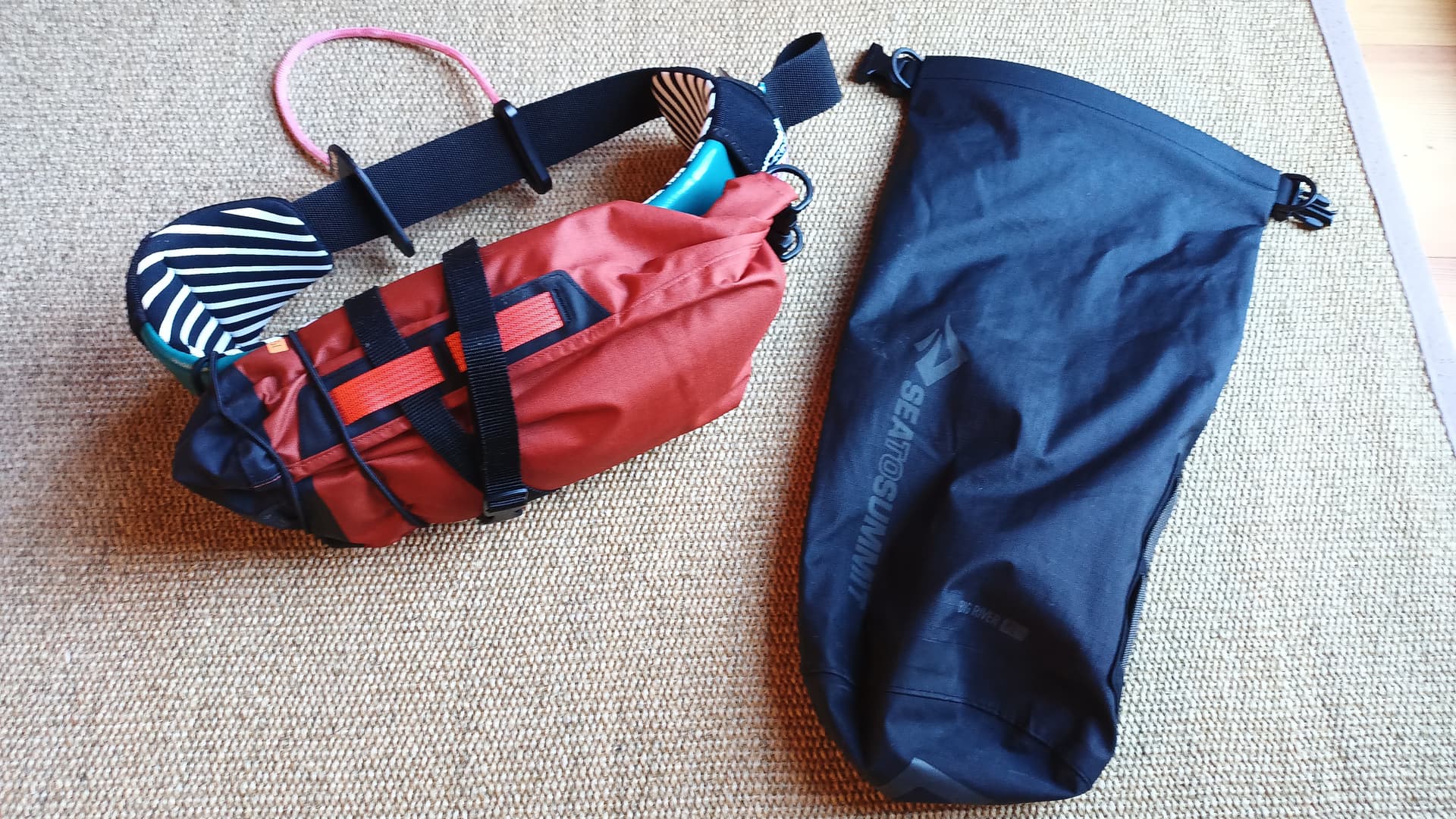
Drybag mounted on harness to carry extra parawings
-SeaToSummit Big River 5l or 8l with extra webbing on the sides (5l one pw with shorter bar, 8l long bar or two pws) (Edit sept 18: have since switched to one size bigger’ 8l or 13l, just easier to get the pws in there and do full three rolls of the opening for water tightness)
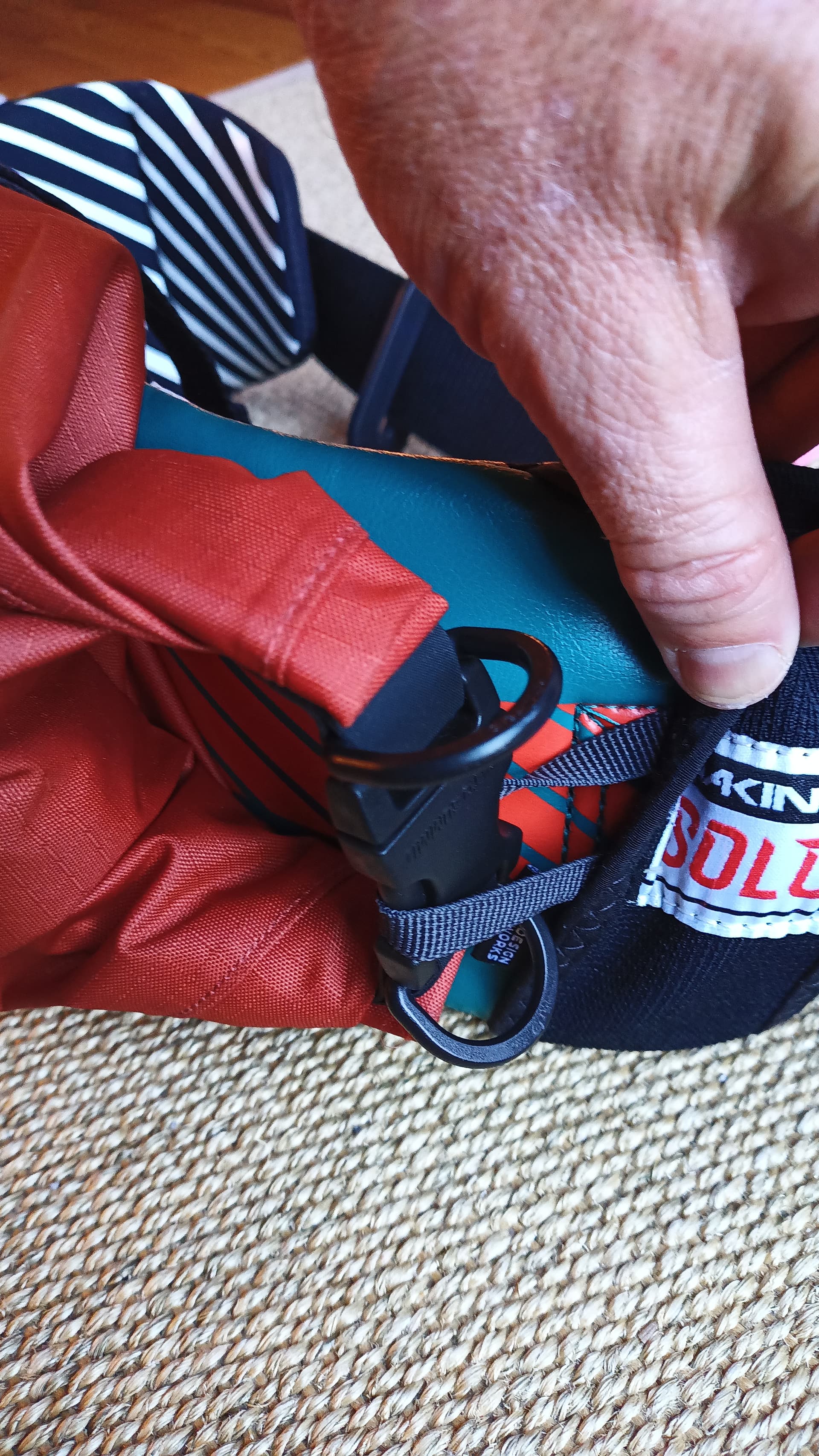
-short line or webbing belt loop mounted around one harness end to secure bag closure through
-longer line or webbing belt through drybag’s side webbing loops to compress and secure drybag around/ to back of harness
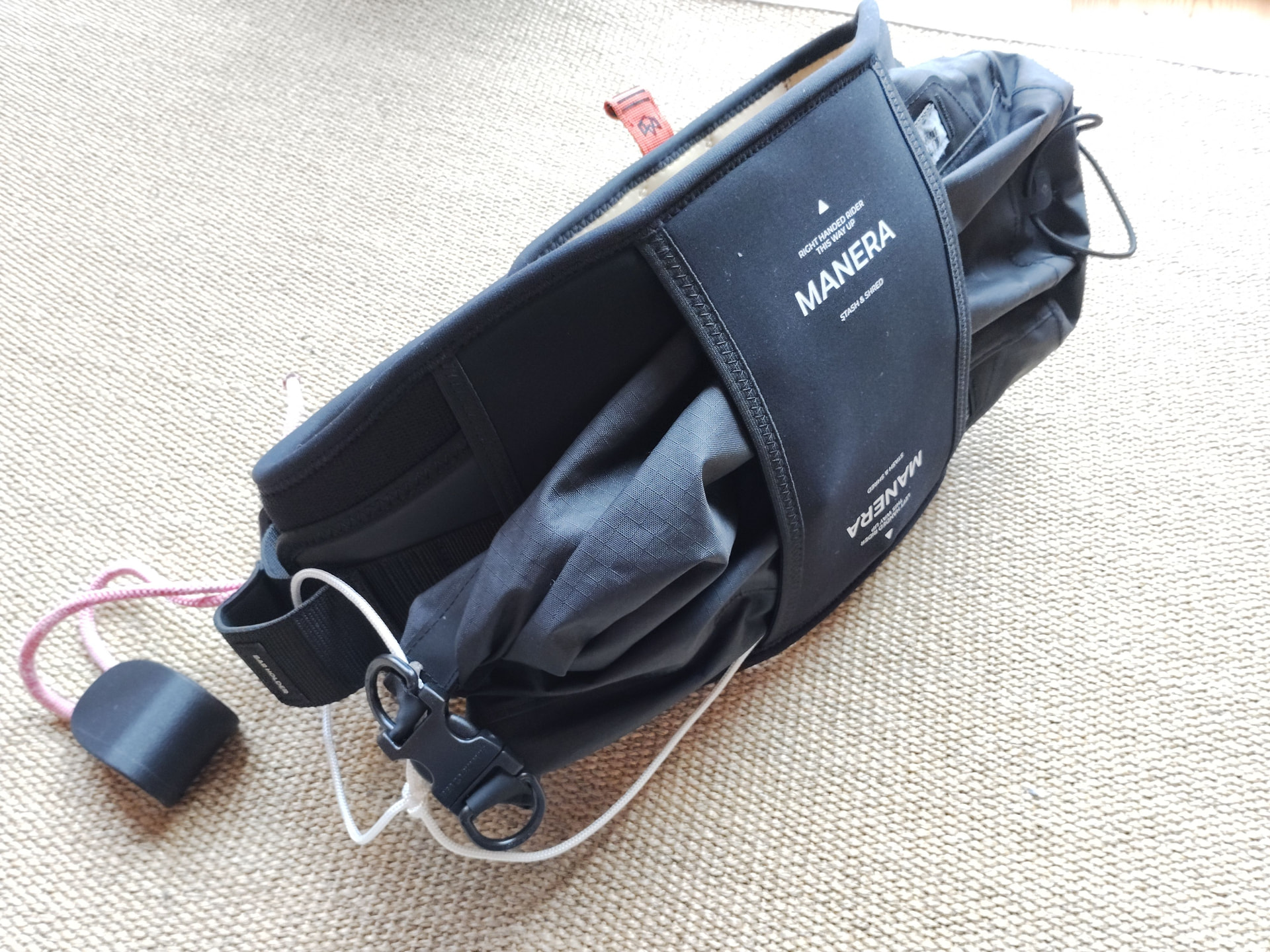
Edit nov.25: i just got the Manera pocket wing belt, will use the same drybag, secured with a little string, pushed into the outer neoprene sleeve (empty on pic)… am planning to use this either with the drybag/second pw and the ozone belt below to stow the one in use or without the drybag just as intended
This is helpful, thanks! I’ve been getting so many tangles and having to undo fucked up bridles in the water. Drives me crazy. I swear it’s like the hardest part of parawinging for myself is not getting tangles.
The Ozone ones don’t help with the especially long lines too
Tip on ML parawing board sizing. For the proficient parawinger.
Divide volume of board (L) by your weight in (KG) to get a percentage in the 82% to 90% range.
I’ve been having a difficult time picking out a size for a custom Frank board and saw a good post on Fbook
Jason Toth (77kgs) was lucky enough to demo the KT Super K2 Pro in 90, 80, 70, 65, and 60L sizes and bought the 65L. That’s the 84.4% ratio. So he demoed a 116%, 104%, 90%, 84.4%, and 78% for reference.
I’m riding a 5’5” 55L Armstrong (82% of my 67kgs) and it is borderline too small for up and down conditions. Works great when it’s solid 20 and above, but those 15-20mph conditions or situations with strong current, I feel a few extra % would make the difference. I’m getting a custom 5’9 x 18.5” @ 58L to get me to that 86.5% ratio. A few extra inches of rail line for that bit of extra acceleration.
I bet that if you get up into the 90% to 100%+ ratio, the same board may become less manageable and harder to balance on in DW conditions. There’s also something to be said for a 82% ratio board when getting on board and situated…it won’t push back and be tossed around by chop nearly as much. A bit of give / sink below the waterline can help calm the board and lower the ‘rattle factor’ on the body - which can add up over a long session with a bunch of falls / relaunches.
hooked in, you can try holding the front lines just above the bar, and pulling/feathering them in during the gusts to straighten out your tracks…just expect the sail to occasionally collapse until you find the sweet spot