I just bought an F one eagle 1090 and Brand new HM 14mm mast,on the third session prone foiling in small waves I made a turn and heard a very loud pop.I thought i popped my tracks out of board so i dove down as soon as i fell and there was my brand new plane sitting on the ocean floor.All three titanium bolts snapped and broken screws still in mast.And the F one dealer doesnt care to help me.
A commonly available titanium screw in the US is grade 2. Tensile strength 40,000 psi
A commonly available high strength A286 stainless steel screw has a tensile strength of 130,000 psi. Each screw cost $26 in M6 x 25 long. If you don’t want this to EVER happen again, spend the money on A286 stainless steel. It is the strongest you can possibly get. I’ve told a few Cedrus owners with broken screws to spend the extra for A286 too. www.macmaster.com
2 Likes
Even on cedrus website said don’t use titanium screw on their classic system which is similar butted connection to f one. They only use titanium on the evolution system where their two 10 mm stainless steel pins that up all the load. The titanium screws is just there to hold the adapter.
It’s crazy that F one is rely on titanium screws for all the load. From what I see, f one is a butted connection which requires the bolts to take up all the load unlike a code where is a taper socket system. The bolt is there to hold it tight, not much tension strength need on it.
1 Like
Since this gained traction again. I got 210 pieces of 10.9 grade plain M6x30 for like 50 bucks. Swapping them out every session. Works like a charm.
I wonder what is going through F ones heads now. Do they just either ignore or replace the broken/ lost foils or think about redesigning the complete system? From what I’ve heard from their designers in podcasts they seem a pretty pragmatic bunch.
It seems there isn’t a great amount of resentment from F one riders that this has happened to (from what I’ve read on these threads) however I suppose there would be if they decided to update their system & leave their current riders with orphan parts. I guess they just write off the failures as a loss until the customers start looking elsewhere & sales decline. Must be a tricky business decision.
I’ve been using F-One for 4 years and owned 8 of their foils in that time and never once had an issue. Maybe I’m just really lucky?
3 Likes
No I don’t think so. They must have sold thousands of foils however it’s only the very very few failures that make the news.
Yes this is my thinking, but that said it does always seem to be F-One showing up a particular problem in these threads so I wonder if they’re more susceptible to breaking if all three screws are not properly tensioned, perhaps with an M8 system you can get away with it a bit more.
I think it the combination of over torquing the bolts, bolt material, bolt size and connection design. With the f one connection, you need proper torque on the bolts to hold everything together. But I rarely see torque spec(I’m not sure if f one provide it to their user) or anyone using torque wrench. So depend on the user, they might be over torque the bolts. Because its titanium, it have way lower tensile strength plus over torquing on those bolts.
If you read cedrus mast blog about over torquing any bolt, it elongated the threads so you will need to tighten the bolt even more the next time. And repeat the process multiple times, you end up with bolt failure.
I think the solution for f one, is to either get the torque spec from f one and use a torque wrench or swap out to SS bolts and switch it out with a new set of bolts “X” amount of disassemble/assemble. If you are take apart the foil every time, i don’t see the benefit of using titanium mind as well switch to SS.
I was using F-one with stainless screws on a 14mm HM mast and 1900 Jam (1.4m span)
I was told to replace the titanium screws often and decided to try 316 stainless instead. No torque wrench but tightened firmly, no more than with other foils that I’ve owned.
The screws would bend within 2 sessions.
No thanks.
I’m now on KT and a very happy camper.

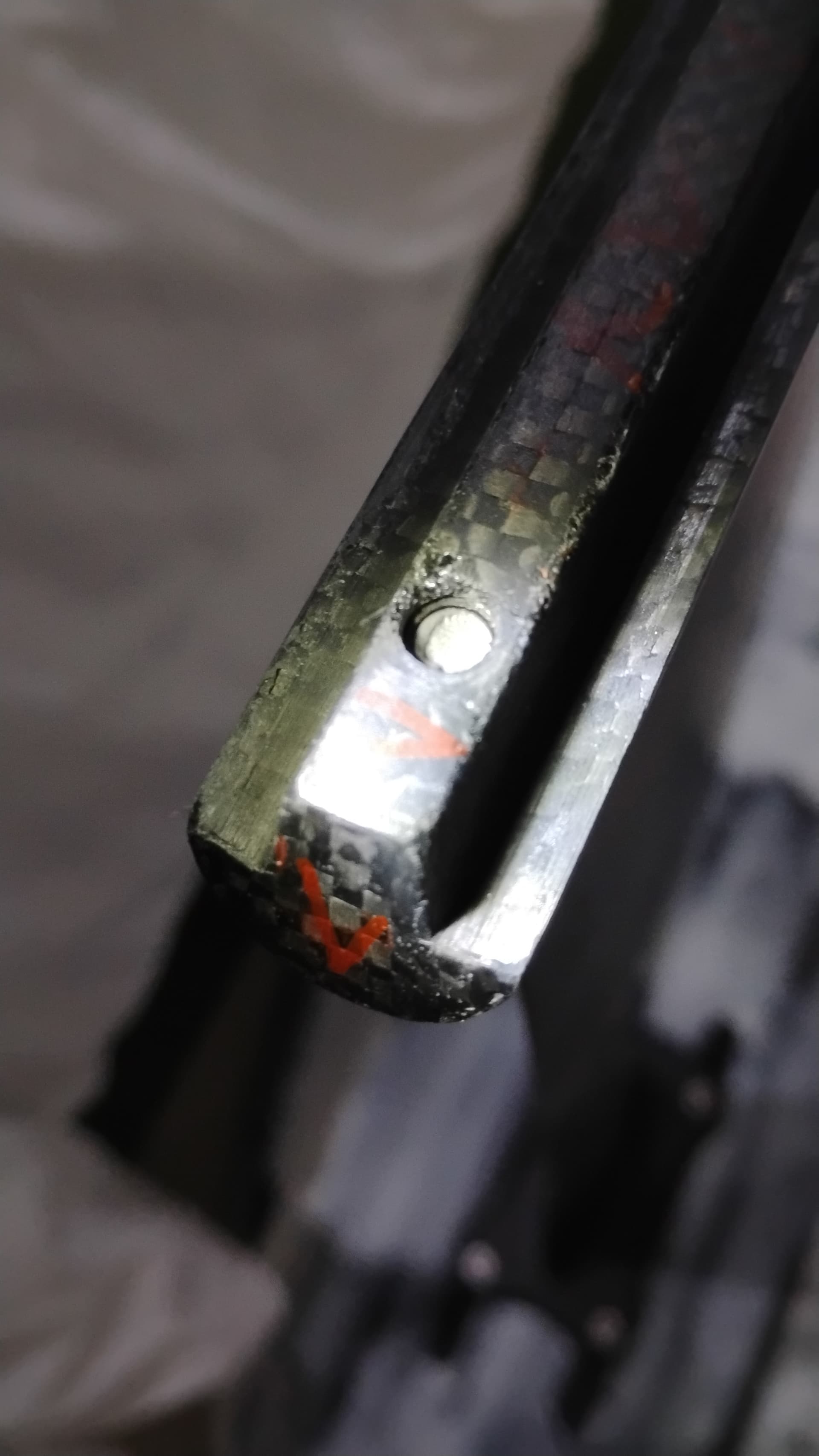
If you get a smaller screw w/ a flat end you can glue it to the snapped fastener to allow you to back it off.
I’d recommend something like a 4mm fastener and Krazy Glue/Cyanoacrylate.
Want to glue the fastener to the center of the snapped fastener and NOT get glue on the little bit of remaining threads otherwise you’ll never get the fastener out.
If you can’t get enough adherance, you might be able to get a removal tool, but highly doubt you’ll get anything to go w/ titanium
Best of luck
Any extraction tool will work fine. Titanium isn’t any harder than stainless.
1 Like
Does the new highly hyped f4 foils system have the same weakness as the f-one mast shearing off the screws problem
1 Like
I’ve used the F4 GP series since it was launched, I think 3 years ago. Minimum 100 sessions a year, 90kg and wings from 540 to 1450.
Never had an issue with the M6 screws. And probably use the same screws for at least a year before replacing it.
For the cases we hear about with the F-one, I suspect that there is something wrong with how the fuselage fits to the mast. Maybe the tennon on the mast is a little too high or thick, so the fuselage doesn’t rest properly on the surface? If so, you will get a very high bending force on the bolts.
M6 bolts should be more than strong enough, if things fit well together. And if we want slim fuselages and masts, going for M8 is not a good thing.
4 Likes
Lots of small people ride tiny front wings kite foiling and baby their gear. Surfing hard, running aground, bigger span wings, 200lbs plus, and this type of connection(vs a deep socket) m6 is a joke.
For me, as hard as I am on gear, ANY report of structural issues with a foil is a guarantee that I’m going to break it.
2 Likes
Problem is, with sea salt deposits or sand in the mix, wear on soft epoxy surfaces, too long bolts or less than perfect torque, your chances of a perfect fit is slim with this design. Any of the above and you have inline M6 bolts under cyclic bending load.
Any first year engineering student (or chatgpt) will tell you bolts are not designed to cary a bending load. Even with zero safety factor, an M6 can only carry a couple of kg on a 80cm lever.
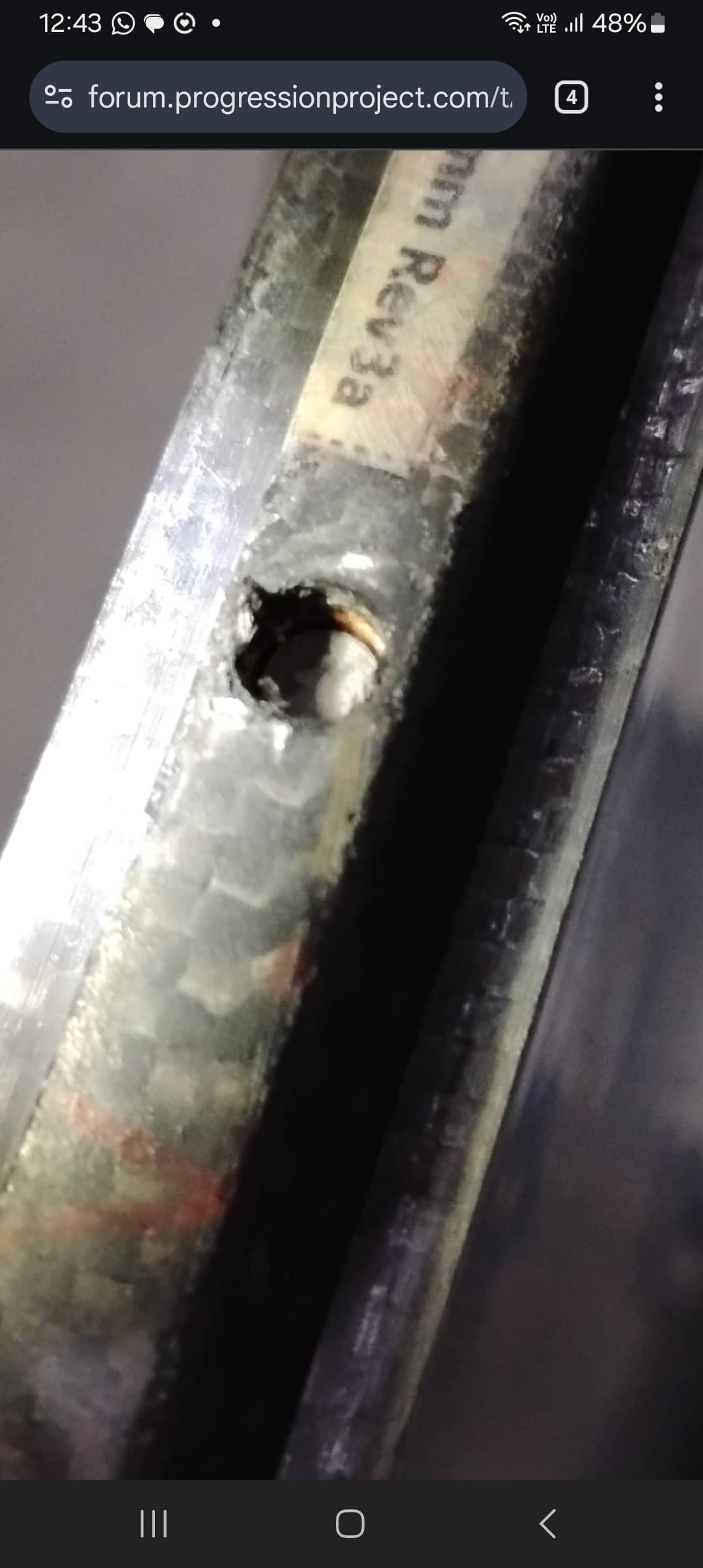
Is that yellowing epoxy over the red markings and Rev3a label? Looks like the foot was re-potted after the mould. Uneven mould release layer or soft epoxy could also cause a loose connection.
1 Like
Here’s my formula for repairing this. I’ve tried a lot of things on similar situations:
- penetrating oil for 24hrs
- left hand drill bit, drill a hole. Many times the bit catches and pulls out the remaining fastener
- if not then screw extractor
5 Likes
Grade 2 titanium is garbage for screws and gives titanium hardware a bad name. You want grade 5, also known as 6Al-4V, titanium for screws. There’s a huge difference between the 2 grades. Only buy from a reputable seller as it’s hard to tell what you’re getting. Grade 5 titanium has a higher tensile strength than A286 stainless and likely cheaper than McMaster’s very expensive high grade stainless screws. “Normal” stainless screws will stretch when torqued down. Over time (hard to say how long this is as many factors involved), the stretch will become too much and it will yield, i.e. it will fail. If you insist on using standard stainless in a high load situation, it’s a good idea to replace often.
1 Like
I’ve seen at least 3 fone foils go to the bottom of the bay due to this 