Back to Tuttle – Back to Performance

Does anyone have a link where someone potted a Tuttle Head onto a mast?

Alex Aguerra was interviewed on the Progression Project and said something like “in the beginning . . . we were modifying mast height and I just cut down a ~ 1 meter mast and put another Tuttle head on it… it only took 30 minutes.”

Could you pot a Fiberglass/carbon head on an inexpensive $100 Axis Mast for kicks and giggles and testing???

1 Like

I’m ready for a new baseplate-free standardized connection.

But I’m NOT ready for multiple, incompatible, baseplate-free connections…

The only good things about the baseplates:

  1. Standardization (not willing to give this up yet)
  2. Adjustability
  3. Low minimum board thickness. (Not an issue for SUPfoil, but for pumpfoil/wakefoil these tuttle boxes won’t fit…)
5 Likes

I’ve used tuttles on all my builds. And have used Michaels on my last few including his adjustable tuttle. They work great! He’s also started incorporating preloading the shims into the tuttle box which has worked really well. And having the angle adjustments has been a lot of fun to go between foil brands.

1 Like

what does this mean?

1 Like

Instead of the shim being held in by the mast pulling it up and into place it has its own screw coming from the deck pulling it up into place. I can send you some pictures when i get home. Basically prevents the mast shifting a little and needing tightening when you do your first pump on the water. Also lets you leave the shim in the box and not worry about it falling out and losing it.

1 Like

What about fit deterioration on a sandy beach assembling and disassembling that connection a million times? I take my Foil off the board every session. I disassemble my foil never

2 Likes

I havent had an issue yet. I disassemble every session too. Only thing I have noticed is the mast goes in a little easier and slightly deeper but its a tapered fit so you can just tighten the screws a little more and itll be fine. The reality of riding a tuttle is the screws are only really there to get everything seated properly once you put a load on it you feel it shift a little into the proper position and at the end of the session its always a bit of a challenge to get the mast back out. I put a little wax on the head of my mast to make assemble and disassembly easier.

DT box are not perfect ,

For small board the box might be too thick , more then the thickness of the board ..

you need to flip the board to assemble it ,

You need to apply much pressure to slide the mast in and that might take few good minutes.

You might gain some performance compared to the standard top plate, but 99% of user will not notice it , ( but probably they will claim its “much faster”)

4 Likes

As far as the thickness of the box the mast only goes in around 2in. You can always cut the box down once its installed. In fact i plan on it that way the box is flush with the deck and you get the direct connection.

Getting the mast in the first time can be a pain but a little wax and it slides right in every time. The gain is noticeable for most people I think. If you can feel a stiffer mast you can feel a stiffer connection for sure.

5 Likes

don’t do that! you need to leave a bit of space (even just 1mm) between the top of the mast and the deck for the taper to engage properly.

1 Like

Sorry that’s not what i meant. I still leave a big gap between the top of the mast and the deck for the taper. I just mean if the board is 5” thick having a 6” tall box means you trim off 1” after install. Not planning on a 2” thick board and messing up the taper fitting.

The Radix system is pretty cool and does solve a lot of the issues that the plate system has but it’s just introducing a new standard that is incompatible with the previous 2 systems both board and mast.

This comic comes to mind:

I’ve seen the existing adjustable tuttle and it leaves a lot to be desired. So instead, what if you did something where the tuttle box itself was in a track. and just like the mast jams in due to a front to back taper the box could jam into the track with a left to right taper (kind of the way the radix works). same 2 screws through the top hold it. all existing tuttle masts would fit in so it’s not a ‘new’ standard. and it would have full adjustability for as long as you want to make the track so we don’t need the plate system. still connects through to the top deck of the board for rigitity. only downside is the added weight.

2 Likes

you might take another look at the comic you posted :grinning_face:

3 Likes

I agree with Kane that foil adjustments are more important than a few grams of weight. Additionally, tracks are more rigid and stronger than the Tuttle box due to the significantly larger connection area between the top and bottom.

1 Like

I nominate Kyle and Kane to be on the new board/mast interface standard design committee…

Who else? (need some board design centric folks too)

1 Like

Apple tree!

My DIY carbon boxes add 330grams ,with bottom stringers included.Main reason is there is no big PU 80kg/m3 block.Since the loads are taken by carbon structures i can build direct into the XPS.

They are super stiff and remain stiff because they do not rely on foam for rigidity.

So the advantages in a tuttle for me would be hydrodynamycs and plate weight/stiffness.

Not sure the gains would justify new mast,new boards.

But i like the adjustable Tuttle concept a lot.So clean.

So which Kane are you agreeing with? In this interview Kane claims the weight IS the most important thing, more important than Hydrodynamics, and he points

DIRECTLY TO THE BASE PLATE as ONE OF THE HEAVIEST PARTS OF THE WHOLE SETUP.

–> The Tuttle would Get Rid of this weight entirely.

This video was the thing that started me to think that the Tuttle could return as massively more advantageous.

0:55

So you’ve gone straight trailing edge line but pretty aggressive leading edge line. Why?

Uh the whole idea is to move the weight of the base plate further forward closer

to the wing. And so that means you can run the foil a little further forward in

the box and the weight is more centered between your feet and so you lose a

little bit of swing weight. And this is that whole So when people talk about

weight,

1:17 when people talk about weight Yeah. and moving weight in an optimal

location, we’ve done brilliant KT branding here, aren’t we? We’re just behind the just behind the

1:26

Oh, there we go. Um, when people talk about moving weight Yeah.

So, you want the weight centered around the front wing.

Yeah. Which is between your feet. The front wing. Between your feet. Okay.

Yeah. So, that that’s the premise of that cross-section. It’s actually about weight rather than hydrodynamics. Right. It is.

1:44 So, it doesn’t really matter what that line of the leading edge is like. Yeah.

Kane - One of the heaviest parts of the whole setup is that right there. You know, this is a

big thick piece of carbon,

1:55 which yours is quite aggressively tapered. Yeah. Like more than most.

“It weighs a ton (The Base Plate)

2:00 And you don’t want it way in the back. You want to bring that closer between your feet.

Yeah.

· The board will be more responsive.

· You’ll use less energy pumping.” - Kane De Wilde
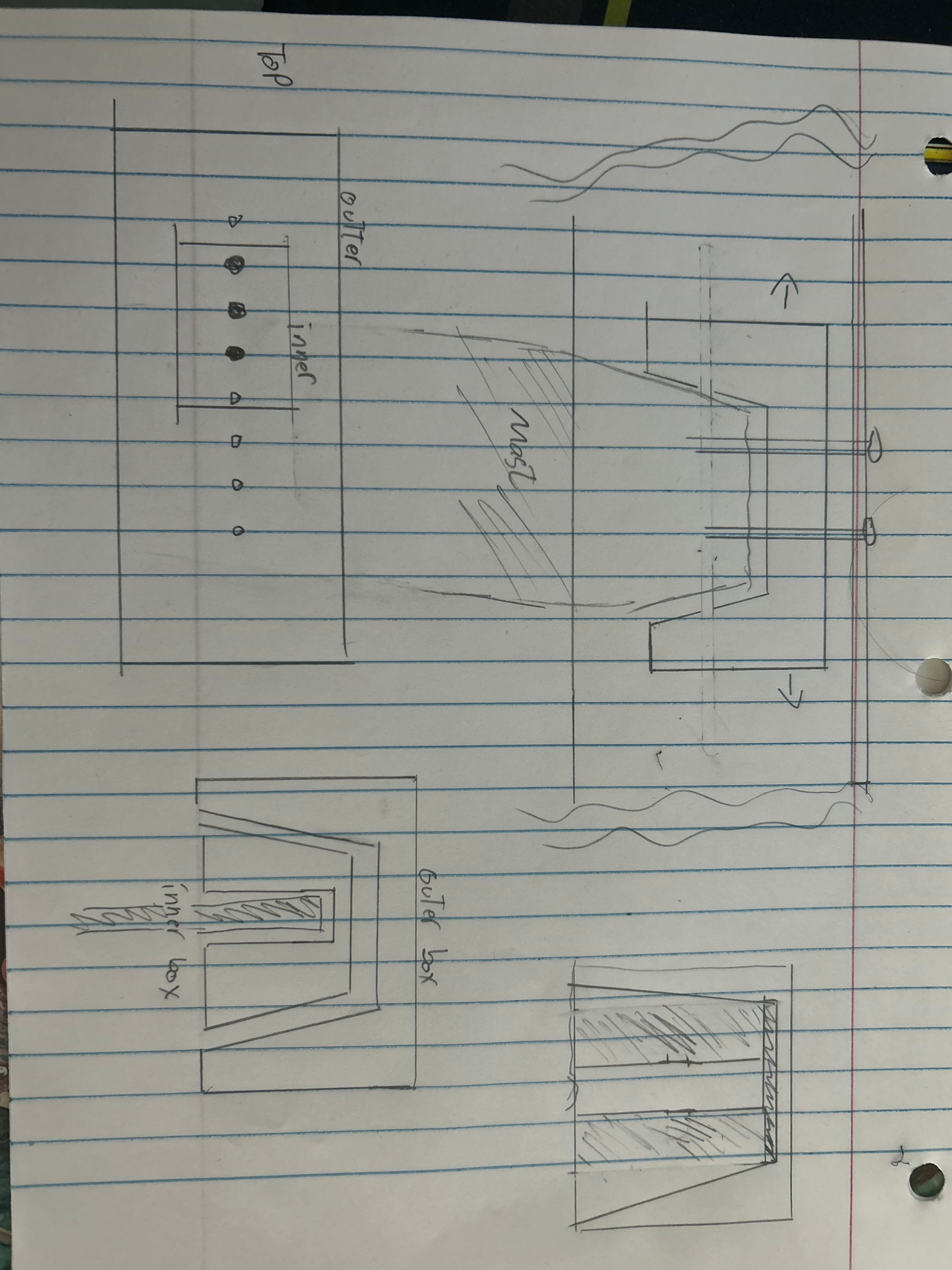
Here’s a concept for a fully adjustable Tuttle system designed to be simple, robust, and open enough that any manufacturer could adopt it while still functioning as a practical “standard.”

It replaces the traditional tapered fit with a straight, parallel slot and wedge-based clamping system. This removes the need for tight tolerances while allowing infinite lateral adjustment and secure locking of the mast.

Because the slot is parallel, it’s much easier to manufacture and the wedges automatically compensate for variation. Mast rake can also be adjusted using simple shims.

This was just a quick 20-minute CAD brain dump I haven’t built or tested yet, but could give some could give some people ideas.

How it works

A 16mm parallel-sided slot is installed into the board. The slot has no taper and does not require tight or complex tolerances. The wedge shape build into the slot could be could be full carbon, or extruded molded plastic like existing tracks. This would fit existing Tuttle masts with some extra hardware.

One wedge-shaped plate is positioned above slot which bolts to the mast, and two wedge shaped nuts below the slot.

The mast attaches to the top plate using standard M6 or M8 screws.

Barrel nuts connect the top wedge assembly to the bottom wedge assembly.

When the barrel nuts are tightened, the wedges are drawn together. This action compresses the slot uniformly around the mast, creating a secure clamping force.

This system provides infinite lateral adjustability of the mast position within the slot.

Mast rake adjustment can also be achieved by inserting a shim between the mast and the top plate, allowing a few degrees of adjustment if required.

Assembly

Insert the mast into the slot.

Attach the mast to the top plate using the mounting screws.

Tighten the barrel nuts to engage the wedges to clamp the mast securely.

During normal disassembly, the barrel nuts, wedges, and top plate remain as a single captive assembly, allowing the mast to be removed and reinstalled quickly without disturbing the clamping mechanism.

10 Likes

So which Kane?

adjustability is way too important and in my opinion and experience the lack of adjustability can easily lead to a large loss in performance vs the gain in weight and stiffness.

To create a strong connection between the board and the mast, you will need to use nearly the same amount of materials. If the integrated mast base is designed to be adjustable, it will add even more weight compared to a basic one.

1 Like