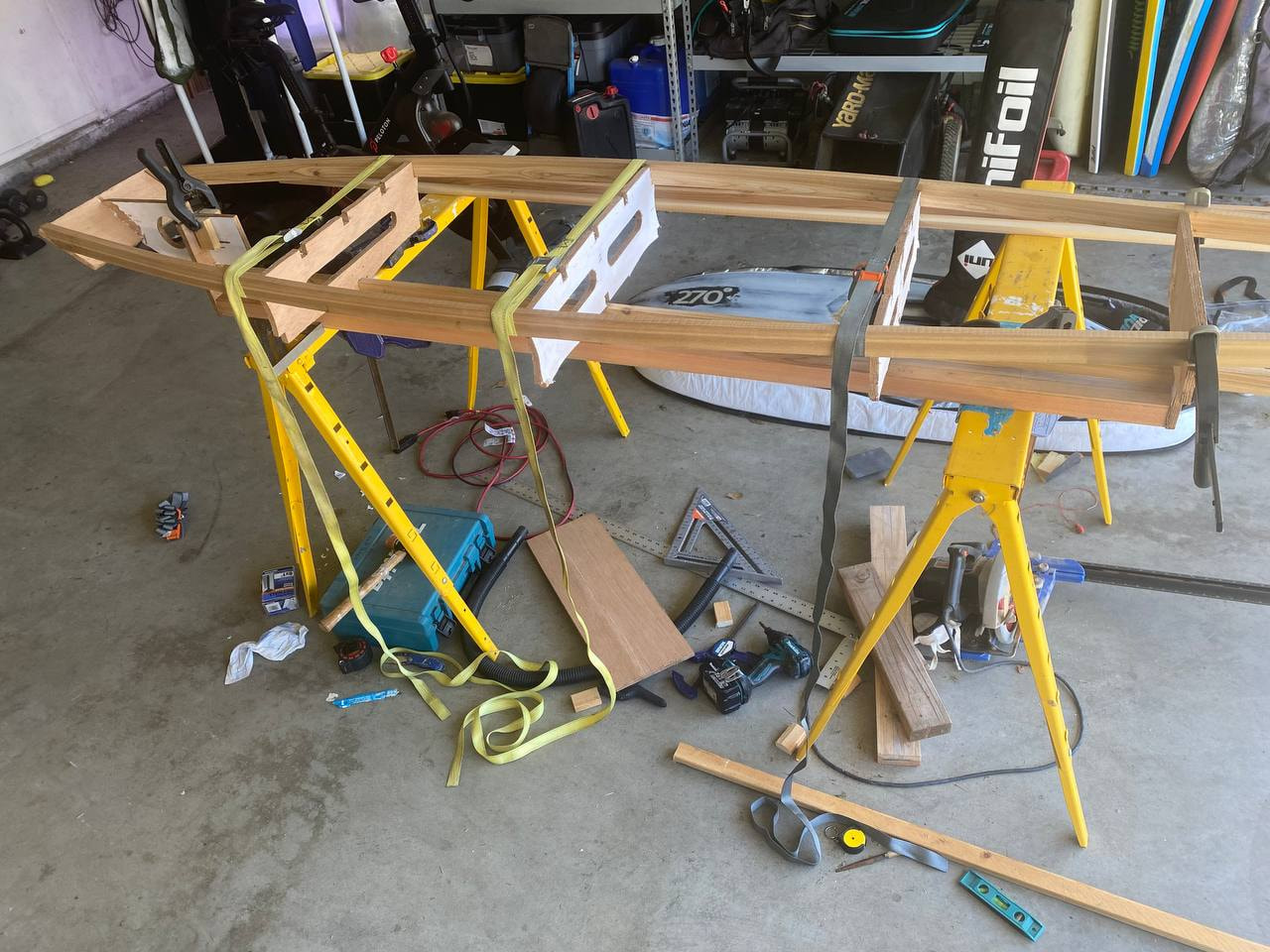
I was wondering if a female mold could be made out of XPS foam,with a backing wood board for rigidity while bagging.Shaping would have to be CNC i guess.
Demoldimg could be done by release agents or a layer of thin plastic,Super77 spray glued to the inside of the mold,like a reverse poor mans vac.
You could resolve the wetting fabrics on a table and transferring to mold by going with resin infusion method. You basically lay in the mold the dry cloth and then on top put peel ply than a mesh and put in and out spiral tubes so the resin can be distributed from one side of the mold to the other side with vacuum cranked to the max. I used that method on number of projects and it works great. You will get the resin to fabric ratio close to prepreg. After that you can put your next layer of honeycomb and vacuum it to the first layer. Then you can repeat the resin infusion with next layer as long as the honey comb is closed and it won’t be flooded with resin. Otherwise if there is a risk of flooding the honeycomb then you can do the hand wetting vacuum on that layer.
I couldn’t figure out how to do that with honeycomb, its open cell. All the core materials for resin infusion are significantly heavier than honeycomb, like double the weight for the same structural properties. It would be possible to infuse the outside layer, but then I’d need to glue on the honeycomb, and that glue is probably heavy enough to negate the win of resin infusion
When you infuse the outer layer in the mold then gluing the honeycomb to that layer doesn’t need much resin. You will wet the outer layer from inside with mixture of resin, cabosil and 410 fairing compound (it is much lighter then micro balloons). The mixture should be of a butter consistency, then scrape with squeegee as much of the mixture of resin as possible then vacuum it to the outer skin.
The second layer you would wet outside on a vapour barrier plastic sheet 6mil) and again wet the carbon through then squeegee as much of the resin as possible then transfer it with the plastic film to the honey comb remove the plastic sheet, squeegee on the peel ply and then put in the vacuum. You will get no resin in the honeycomb.
Infusing the outer layer in the mold will give you perfect surface and optimal resin content.
I would not infuse the second layer even if instead of honeycomb I would use for instance solid core cell foam. In my opinion it is not worth of the extra effort with infusion. Wetting the fabric and using vacuum is sufficient for the second layer and also it is an appropriate approach when dealing with open cell honeycomb. You can always do a test lamination with these methods before doing the full project. I may have some pics and video clips from my infusions I have done in the past, I can share it if you would like to see it.
this is golden advise, thank you. I do think this sounds like a really good way to get the sandwich layup. For the outer skin against the mold, there would be no need for resin infusion, peel-ply and vacuum bag will allow for good resin/fiber ratio
If you can handle first layer of wetted fabric into a mold without any deformation in weave then yes. The infusion process doesn’t have this problem since you put dry fabric into the mold, so you can adjust the layup to perfection before you start infusing resin. As we know, laying up wetted fabric had to be done within certain time window.
Did you consider to use instead of honeycomb the PET foam. PET foam has a honeycomb structure but it is not hollow so you could make the sandwich in the mold in one shot with vacuum bagging.
Divyncell foam is great. The lowest density is 80 kg-m3 which is what is often used in sandwich board construction.
Nomex Honeycomb goes down to 48 kg-m3 which is not quite half the density. But it also comes with about 2.5X higher compression strength, but even more importantly about 4X higher shear modulus, which is the key metric for panel stiffness.
It might be possible to get even better properties out of aluminum honeycomb because it can be made at about 2/3rds the density with same properties. But with the penalty that a fiberglass scrim (can be very light) is needed between the carbon for galvanic corrosion. Everything I’ve seen looks like it might be a wash on strength and stiffness to weight. BUT, aluminum honeycomb might be more durable.
At the end of the day a downwind board has about 1.5m2 of surface area. 1/4" H80 divinycell core will still be under a kg. So there isn’t a hell of a lot of win going to honeycomb. But if we’re trying to be under 4kg, its 10% of the weight on the table
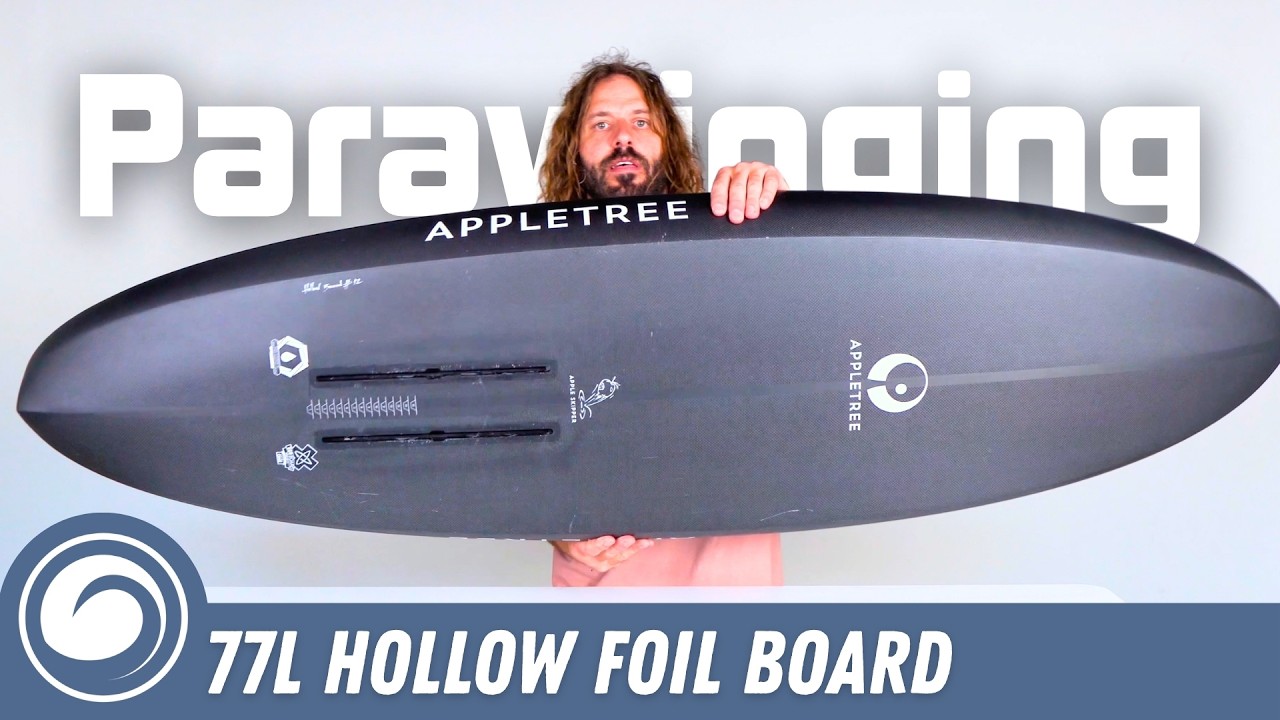
For hollow board, I think 5lbs/ft3 PET 1/4” sandwiched with 4-6oz carbon fabric. The combination of biax and uni carbon is preferred since it will give you torsional and lengthwise stiffness in the board.
Had an oopsie with a garage door and remembered I own a scope to verify the structural integrity of my KT hollow crossing. Thought this might be interesting to some: