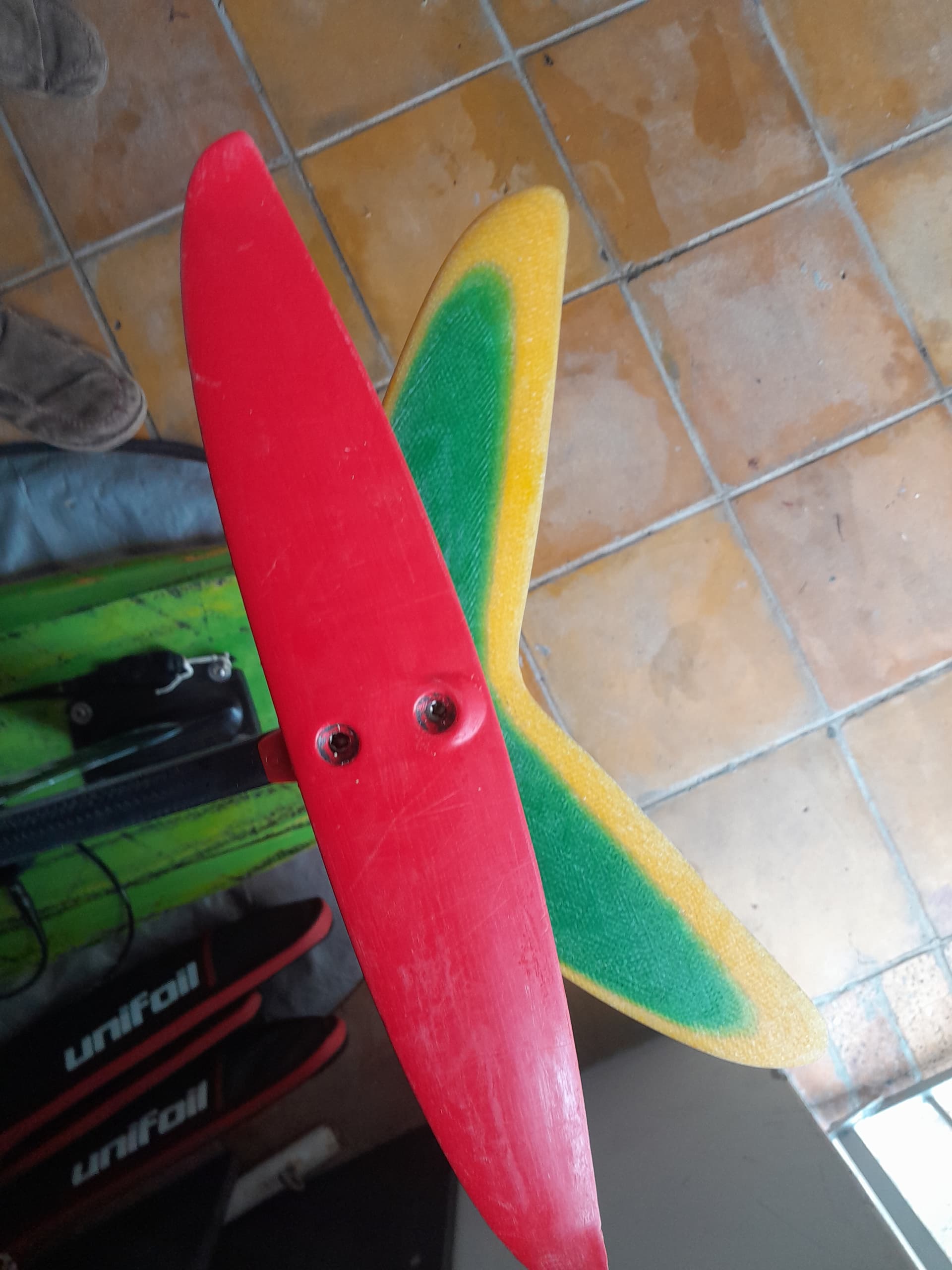
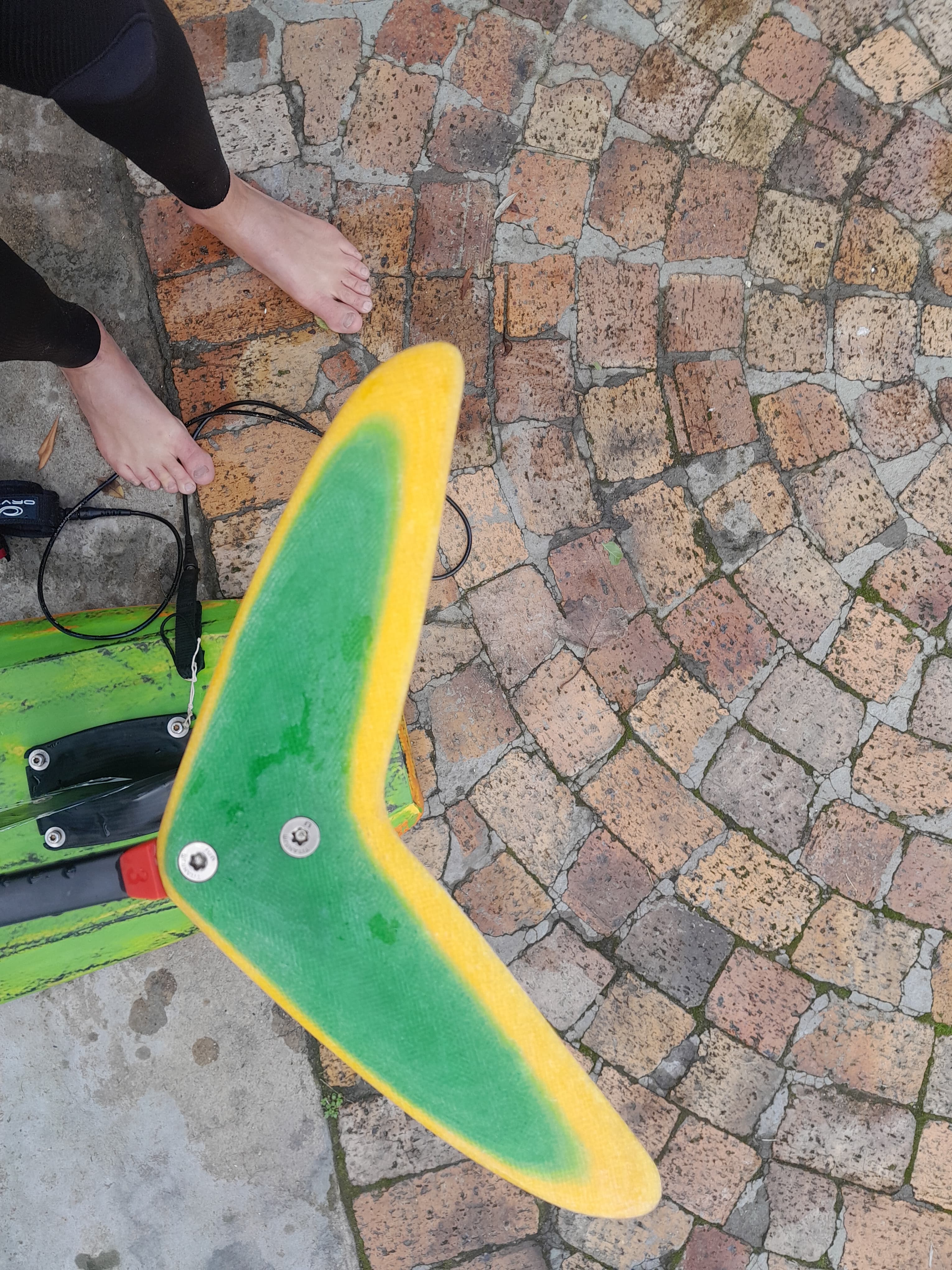
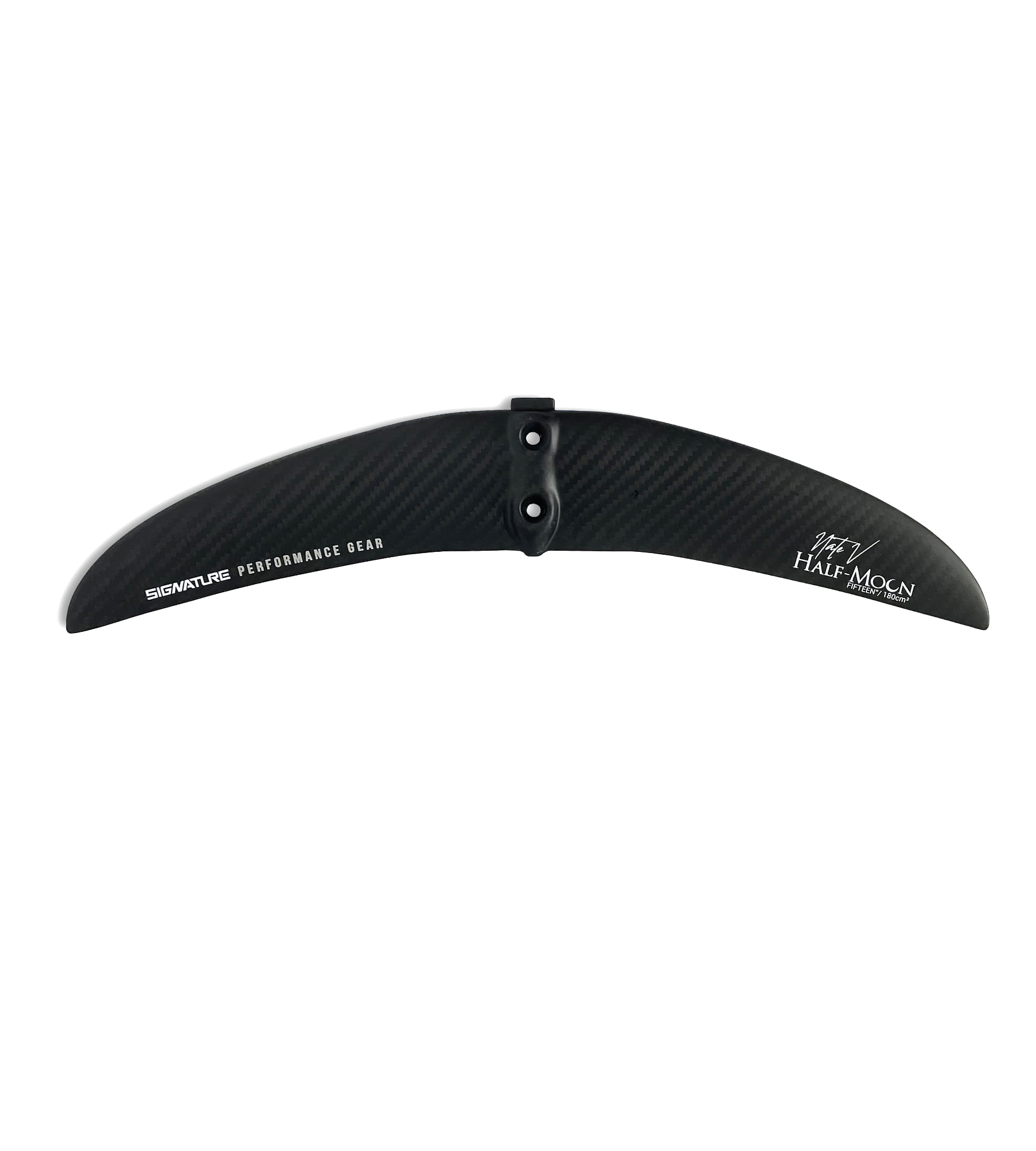
Recently finished my second V shaped stabilizer. The outline was taken from a Uni 14 stab angled around the front bolt. Very rough hand sanded foil to about 6mm at the base. Had my 3rd session on it today and can’t believe how well it works. Better roll, faster, stable and smooth through turns and pumping is much better. I know for a fact that the finish, flex and foil section is inferior to the production stabs. So then it must be the outline that gave all these benefits? Why are we not seeing more of these in production? Did i miss a downside to these swepped back tip outlines?

2 Likes
That arrow shape encourages flow down the leading edge from the center to the tips increasing tip vortices and ventilation
So could ventilate when carving or pumping closer to the surface? I will test some harder carves next session, but there were no issues with pumping into a 15knot onshore.
I mean they might have done something to mitigate that at the expense of something else. There’s a lot of variables. At the end of the day I think the big selling point of this design is it allows for longer fuse levels of stability on a shorter fuse. At the time a lot of people were starting to rock shorter fuses for hype and street cred and these let people dial back that instability a little.
Maybe there was some feels in the increased flex but I’m skeptical of that.
At the end of the day a straighter wing will do the job better and more efficiently.
1 Like
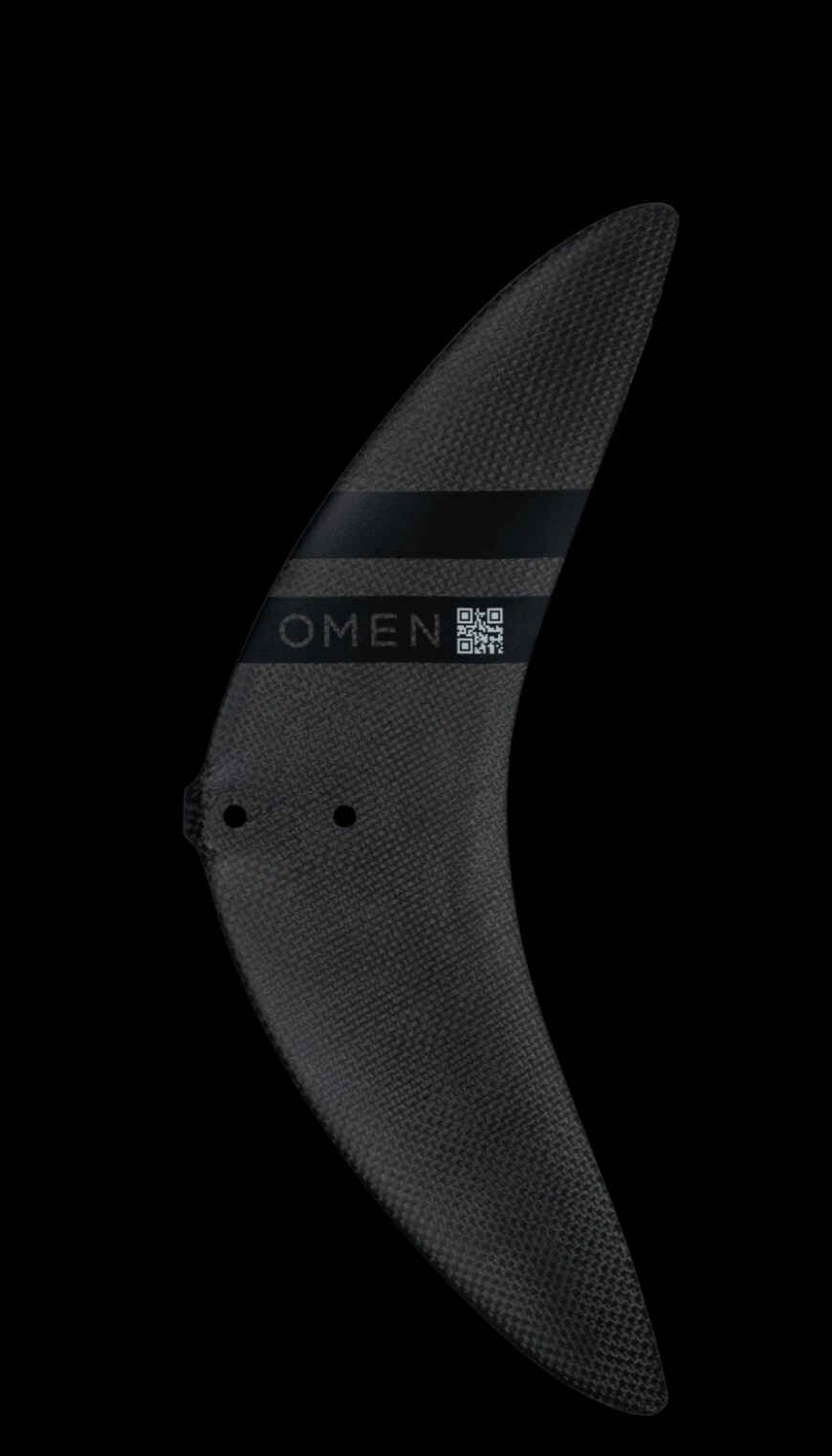
Omen Foils Ahi tails. I’ve tried 3rd party flat tails on the operator and they do offer less drag, but they lose some of the turning magic. I need to try the official honey badger tail. Heard very good things.
1 Like
I assume with these designs, we get more tip-twist-off when pushing hard - reducing the “lift” of the tail. But what’s funny is that the tail is not producing lift, it is creating downforce and therefore stability. So tip-twist-off and the resulting spoiling of lift effect would have the opposite effect. When pushing hard, we’d get less pitch stability and less front foot pressure. I personally can’t imagine that feeling good, but that’s not what matters. What matters is what is feels like to ride. Perhaps there is something going on that I don’t understand.
Thanks, I’ll try get some more info on these.
That also reminded me of the KD Boomerang that got good reviews at the time Which is your favorite Kdfoil tail?
I seem to remember that KdW suggested riding them with a longer fuse which is kind of counter intuative. I’m definitely feeling more pitch stability as @TooMuchEpoxy mentions
Would you not theoretically have the same amount flex but angled towards the rear? That would “nose-up” the tips creating more lift/downforce
i’ve chatted with Chris Porter (@crisp og) about a flex version of a v tail
Keen to hear both thoughts. is he building you one?

Here is a high end sailplane from Germany with 22.2:1 aspect ratio wings. This is because higher aspect ratio wings provide more lift with less drag, but look at the tail. The tail here is maybe aspect ratio 5 or 6. The tail is not to provide lift, the tail is to provide righting or stabilizing forces when the sailplane is not pointing straight ahead. Just drag from the tail is a righting or stabilizing force, just like if you tied a string to your fuselage, it would stabilize you, so drag from a tail is not an automatic penalty like drag from a wing. One wants a “nice” feedback force from the tail to keep going straight when disturbed or to keep turning once a turn is initiated, so maybe the lift force combined with some extra induced drag (from a lower aspect ratio tail) provides a smoother increasing righting force, and maybe this is why the V-tail works, it provides a very smooth increase of righting force as one disturbs the direction like in initiating a turn, where as a high aspect tail would provide maybe a very “harsh” or “sudden” righting force that would make going deep into a turn difficult. The do all kinds of analysis on sailplanes in Germany, its very hard to believe they have never tried high aspect tails, all sailplanes I have seen have tails that are way way way lower aspect ratio then the wings.
6 Likes
I wonder if you chopped g10 stab to get the same effective span as the V, what that would feel like. I’d bet that 80-90% of the feeling you’re feeling is the reduced span. Especially if you’ve just hand shaped a crude foil shape.
I don’t really see the functional value of the V, in planes it has a very specific function, as does a reverse V, on a foil without as much yaw I don’t really know what it would do
Thanks for sharing. I would definitely describe the V tail as “snooth” - maybe why it feels faster even if there’s more drag? Also makes me wander about the new “skinny” high AR tail craze.
This is a great addition, thanks!
I will say, these are only good for efficiency downwinding, not good at all for turning. I’m on high aspect tails for downwinding, but for prone, find the slower the better, as long as not too wide, and just enough glide for linking 1 or 2 waves. I want to chop a few tails and find the limit of low AR, as currently the span of the tail is limiting roll
1 Like
not yet. he’s focused on the flex 130 rn, waiting on wind to test mine
I have the Armstrong V tail but haven’t used it for over a year or more. It was great some of the time for SUP foil, I didn’t like it for wing foil, but the main problem was consistently getting it work well. One day it was great, the next not, and I didn’t have the time to do loads of testing changing one thing at a time to work out if it was because of the front foil combo, the fuse length, the conditions, etc. So I just stopped using it in favour of the Surf 205 and other tails (like 140 and 180). Of all my tails the 205 is the most consistently easy to pair and use, I’m just finding it a bit big, especially when paired with HA680 so waiting eagerly for the new Surf 170 to come). Maybe it’s because I’m mostly using HA foils now and maybe the V tail worked better with mid aspect foils?
Thank you for that perspective. Very interesting. It may be speed related - assuming you are doing higher speeds on wing and/or HA front wings.
The Armstrong V tail seems to have flex and thin tips, perhaps that’s what is narrowing it’s usable range?
I only prone and have only used my thick Frankenstein raked MA tail in punchy beach breaks at relatively lower speeds on surfy AR9 front wings.
Perhaps it’s equivalent to a smaller MA stab on a slightly longer fuse? Better pump, less drag, lower stall. I am building a few more of these so hope to have more insight soon.
With that stab you’re essentially reducing the span and lengthening the fuse. So it will be more stable because of the longer effective length and roll easier because of the reduced span. Personally I’ve gone to a longish fuse and very small stab (120sqcm max) and I really like the way it rides.
It looks pretty chunky and you said it’s rough. If you like the way it feels build a good one and try it.
1 Like