Short fuse correct? Oh and what tail when it happened?
2 Likes
I’m a fan of surfing big foils, being a big guy. I tried the big code surf and race foils as well as the big axis foils. The Enduro 1300 is a winner in my eyes - all around low drag, good pumping, and good turns.
3 Likes
Holy crap that’s not good to see. It’s not a issue of the products quality it’s just that the afs system isn’t designed as good as say code which uses very thick fuses probably specifically for the reason of failure you posted.
Ha38 both times
1 Like
Awesome, thanks. Bummed you snapped some fuses but it’s also great to hear the customer service has been flawless.
From a learning/science standpoint a repeat break is actually super cool to see. I alluded to this in my article on the skinny mast:
Specifically, there’s a section in the article “What am I unsure about?” where I stick to AFS only (other research ongoing) but talk about these mast/fuse relationships.
“The Ultra and Enduro foils though, are a bit more sensitive due to the relationship of the foils leading edge to the leading and trailing edges of the mast” and “create an extreme torque based experience”
If we look at your breakages here’s what I see. A large span foil that has a reduced distance from leading edge of foil to the mast allowing for more torque and maneuverability. Then you add to that the Cedrus surf mast which has more flex and a shortened chord allowing for more torque and maneuverability. Combined, you are getting too much torque out of the system. (note: the 1300 isn’t recommended with the AFS skinny mast and the Cedrus isn’t recommended with wide span foils)
I’m also looking at front to tail span ratios. If we take a peek at the span ratio of the 1300 vs the ha38 it comes out to be 1190/380=3.13. In my experience, when your span ratio goes over 3 you start opening up out of balance pivot experiences. This is fine, it’s fun, but that ratio is also a way to throttle back the torque of a short chord and shortened front fuse.
So now you’ve loosened the stability of the kit and increased torque available by:
- Shortening the fuse in front of the mast.
- Made the mast chord shorter.
- Put a high span ratio tail in the system.
- Using a mast that is not as stiff as the recommended 80cm UHM
- *Unknown: Adding foildrive to the system.
The result? You broke a fuse, twice! I’m not trying to blame you or anything and you’re obviously not trying to blame any component of the system. I honestly think it’s really cool what you’ve done here, building out and breaking the same system twice. That’s gold for research purposes.
In other brands and foils with monoblock front constructions (AFS, Code, Lift) that pull the front of the foil back towards the mast the ability to snap the fuse in that location is removed because it isn’t bolted on. However, I think the same overtorqued system is still in play but problems manifest in other ways. I think, very possibly, that’s part of why those foils ventilated for me and others on the Cedrus mast. I was using the smallest tails available when those issues appeared. There was nothing available to break, so the system simply collapsed.
The question for me that is unanswered for now is how much mast flex and build quality comes into play. For that, the testing beyond AFS has to be done using the One Ocean mast and is currently in progress.
If you still planned to go out and use that kit I think I’d recommend:
- Don’t use the Cedrus mast with it again. It’s not recommended by AFS or by Cedrus and you broke the fuse twice with it.
- Consider the HA 43 tail. This is one of the cheaper investments but it will balance out the system.
- Perhaps, long term, consider the HM or HR mast for pump practice. The 120mm or 135mm chord will reign the torque in.
Huge thanks for sharing your experience. I think it shows that we now have options available to us to create and customize our ride to the point that systems fail and equipment breaks. I get the feeling that the end of the research on this will continue to teach and reinforce to us that just because we can bolt certain kits together doesn’t mean we should.
3 Likes
Seriously @Wouzel The OP breaks a UHM mast and then two fuselages, and you find a way to blame Cedrus? Here’s what I see:
-
The fuselage failed due to pullout loads induced from rolling moments of a large span foil. It has absolutely nothing to do with “an extreme torque based experience” which isn’t even a thing.
-
A stiffer mast INCREASES dynamic loads on the system. This, coupled with the lower strength of higher modulus fibers is why UHM masts are more prone to failure. A softer/less stiff mast will DECREASE dynamic loads in the system and be LESS LIKELY to cause failure at connections. This is based on Newton’s Second Law of Motion: F=mA. I think we can all agree that stiffer masts increase the accelerations felt when turning and pumping. That’s why we all like stiff masts. Force = mass (your weight+equipment) * acceleration. Faster acceleration = more force. So blaming the lower stiffness of Cedrus for these failures is not only poor form, it’s technically inaccurate. It’s actually the opposite.
-
Ventilation and strength are completely unrelated, and suggesting that the ventilation you experienced (as a winger on a surf mast) with your Cedrus over a year ago now somehow prevented breakage in your “system” because you were using smaller tails is again flawed and inaccurate. You ignore the single biggest difference in your setup vs. the OP which was that you were on “monobloc” silks and not bolt-on enduros.
-
We did not design Evolution Surf for long span foils, but no one has ever broken an Evolution mast with any span foil. Evolution Surf was designed for performance prone foiling, with small to mid-size foils, where drag is really critical. When you start to get up to these monster foils, the drag of the foil far outweighs the mast, and reduces the benefit of a low drag mast. This is why we don’t recommend big foils. Evolution Surf still maintains industry leading glide through reduced wetted area and works extremely well for 99% of our clients so once again implying otherwise and suggesting that it’s not stiff or strong enough is unfair and untrue.
-
Unrelated, stay tuned for our new aluminum mast which will be perfect for dock starting and pump foiling with the stiffness of UHM masts at 1/4-1/3 the price. And in some cases, even less drag. More to come at AWSI next month.
@FoilLight don’t ever hesitate to reach out with any questions regarding your setup; we’re here to help if needed.
11 Likes
Dude, come on, you’re way too sensitive and move to discrediting people way too fast. You do this every time. I didn’t blame Cedrus and am not blaming Cedrus. I clearly acknowledged the monoblock difference. Your mast was involved in a scenario that you didn’t recommend in the past and aren’t recommending now. It’s also a scenario that isn’t recommended by anyone I know from AFS. He broke his fuse twice with your mast! Not your fault but why in the world would anyone recommend to keep using the same rig?
There isn’t blame to be placed on any brand here. However, those of us who are out foiling should be able to have open and honest discussions about assembling kits that create imbalances that cause failures. IMO, these failures are preventable if we know what to watch out for but it’s really difficult to have conversations about this stuff with a brand being so reactive. Assembling a short front fuse with a short chord mast, small tail, and large span foil is a recipe for trouble. I’m in the field nearly every day testing this stuff and it’s just an imbalance plain and simple. Swap the Cedrus mast out for any short chorded mast and the same imbalances happen, which is why I brought it up in my AFS review. The consequences of these imbalances do appear to be different when mast stiffness changes. This again isn’t something to freak out about, it’s just something we need to be aware of and keep in the conversation. Every detail matters.
This is an awesome learning experience for us all about kits and I have zero interest in having it ruined by getting sucked into the Cedrus drama again. If you’d like to help out that would be awesome. But just jumping in to discredit others, offer no solutions, and then hijack the thread for a sales pitch sucks. I’ve shared what makes sense and I’m bowing out of this conversation so I can get back to fun in the river doing/sharing the testing and research that I’m working on.
The two of you need to quit. This is the absolute worst of this otherwise incredible forum.
Kyle, I have been involved in the water-sports industry for most of my life. I’ve never encountered a worse representative of a product. Stop engaging.
Wouzel or Bryan Lee or whatever. Just stop already. Don’t even bring up Cedrus. If a post is made that relates to it, just bite your tongue and go catch a ride to forget about it. Your are beating an absolutely dead horse.
Nobody cares to hear this anymore!
15 Likes
This is an interesting topic. I have to agree with everything Kyle said (and I design and build thousands of pounds of epoxy composite parts per day…not on weekends usually though). Also, carbon for a fuse isn’t isotropic like aluminum, so it’s going to be more compromised in strength.
For comparison sake, Axis seems to be very successful with their “Advanced +” fuses (close distance mast to front wing) with front wings over 140cm wide and teeny tiny rear wings. To me, it just looks like the AFS carbon fuse is being pushed to its strength limits.
I think the Cedrus masts are friggin awesome and super tech, plus, plus, plus, handmade in the PNW!
I look forward to learning more about the Cedrus aluminum mast. As a 200lb dock pumper with wide span wings, I’ve heard rumors that it’s going to be super innovative and an evolutionary leap forward for our sport. Aluminum…….the new UHM carbon!
1 Like
Clearly the fuse design isn’t up to task. Analyzing the mast used or how high aspect the tail wing was is way way over thinking this: if the fuse breaks from simply riding it without impacts to sand/rocks or jumping it isn’t strong enough.
There’s no mystery here. If any other brand put a couple blind nuts in carbon to attach their front wings no one would write a novel critiquing the user’s setup or blaming mast companies when it broke from riding.
3 Likes
Even simpler, it’s either a warranty, or that rusted nut is causing issues. The fuse is fine as demonstrated by all the examples of it not breaking when rammed into things
Wow, that fuselage looks absolutely trashed  That sucks.
It’s weird that it broke like that under normal use. The Enduro 1300 is out for a while now. If this were a common problem, we should’ve read about lots of failures, no? I still hope that you have just been unlucky and its not a common problem - but the amount of gear you broke really makes me wonder…
Like @Matt I also saw the corroded threads and thought if it has something to do with the failure, but I have no technical explanation.
Of course no system is completely perfect, I also saw some guys breaking their Axis aluminum fuse…
Thanks for all the other replies as well!
-nik
I don’t doubt individual casual user may have a good AFS experience.
But I’m having a hard time believing that long term AFS users (if not ambassador?) are not aware of the quality problems with AFS, and it becomes plain BS when suggesting that AFS is known for its reliability.
If you are close to a shop or follow a bit AFS on social networks, you know it’s an horror show.
Mast are breaking at an absurdly high rate compared to any other brand.
Either cracking at the base or the inserts getting pulled out and people losing their foil (because yeah a design where 100% of the pressure relies on inserts and bolts cannot be a durable design)
Everybody knows it.
Just go on the Facebook group, not later than the 2nd of August a guy posted this, and you have like 20 users telling him they had the same problem.
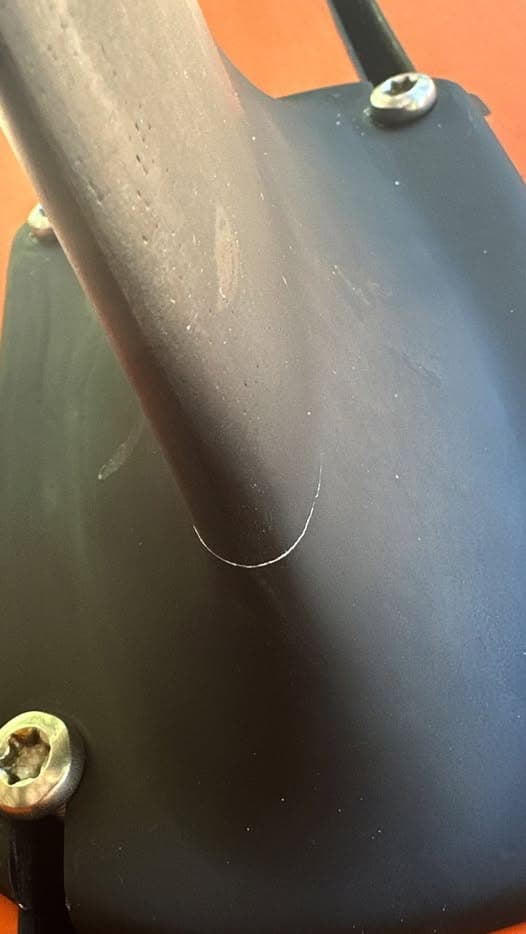

Shitloads of other reports on Facebook.
And we’re talking about a group moderated by AFS, plagued with ambassadors always suggard coating everything.
More intimate whatsapp groups are much worse.


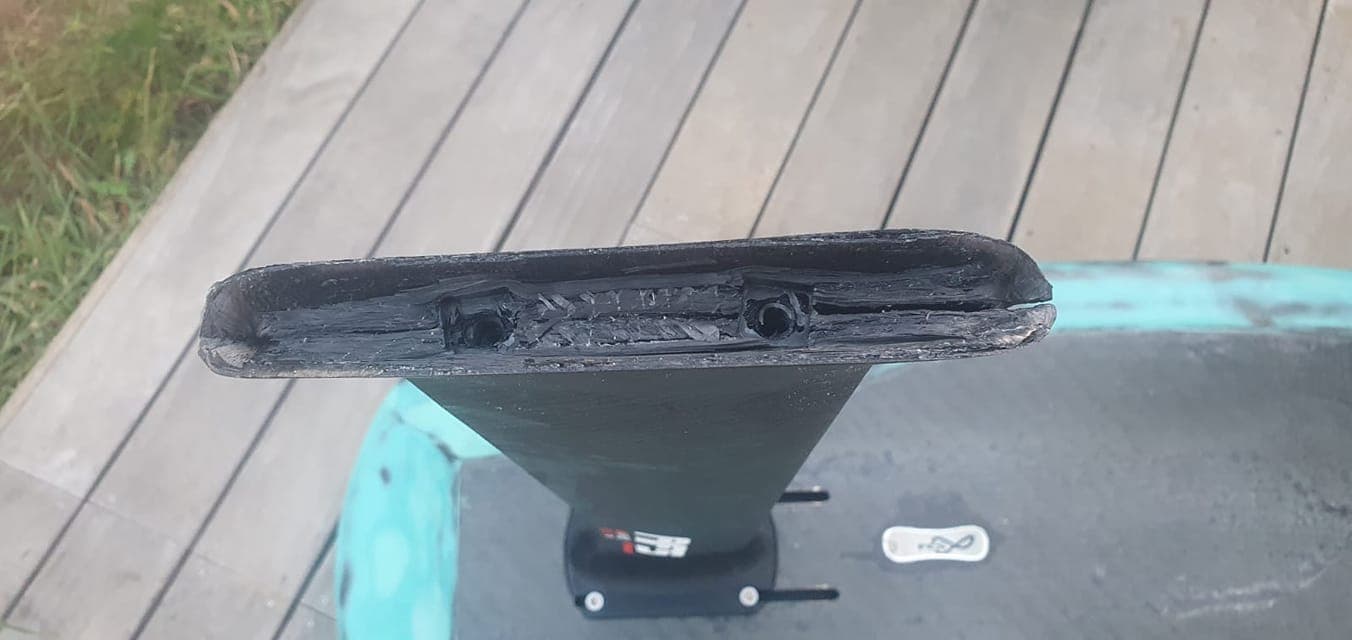
You will not see such rate of failure report on any other brand, even less on Axis, which has a x10 larger user base using much larger wings on average.
And AFS acknowledges the problem.
That’s why they do not challenge people and are perceived to have a good customer service.
All that doesn’t change the fact that AFS might be your favorite brand to ride (it’s a matter of tastes, it’s subjective).
But what’s not subjective, and is a an undeniable fact, is that it is one of the least reliable and most fragile brand on the market.
3 Likes
I’ve been super happy with my setup of 850/1050 Silks and UHM 80cm mast with multiple tails, riding them since spring of 2024.
My only minor complaint is the tails are noisy and fragile at the tips. That said I have only managed to damage my 132 tail tip.
I’m just under 80kg and not jumping so maybe I’m not the hardest on gear but at this point I have not found anything else I’d consider riding, nor a reason to switch. I’m not saying there aren’t other great foils out there but for me it is AFS. I am a believer of this style mast to fuse connection and very happy with quality to date.
It’s not fun to have breakage or issues with gear but there is a great warranty and seems that customer service is very good although I have no first hand experience at this point.
@mediterranean_foiler What facebook group are you referencing? I can’t find anything.
Tony
I asked the same question via PM. Can’t find the facebook group he is referring to…
At best I can find the first picture he posted. It seems he has pulled together everything he could find to make it seem like a widespread problem.
I can’t substantiate that. Having no personal breakages, I’d be surprised to find there was a widespread issue.
I really wonder how he was wronged to want to spend so much time blasting this nonsense.
I’m not an ambassador and haven’t had any quality issues personally. With regards to that base plate failure pictured above - I have a theory. The triple Torx tool that comes with the kit doesn’t rotate the base plate bolts without making contact with the mast (Which is why I dont use it for the baseplate bolts). I’ve seen a lot of masts with scratches from people using that tool. Could repeated use of that tool put a small score In the mast that creates a weak point where the mast snaps? That break is EXACTLY where the contact is.
I’m not defending anything. Just sharing my experience and a theory
this is the group and post, which does not seem like the smoking gun that @mediterranean_foiler is claiming,
Having watched early Code, Axis and Unifoil have various QC issues at various stages I don’t see anything quite as extraordinary as is being claimed here…
(you can dig up broken foils on all brands on their groups and whatsapps, what matters is the recourse and follow up, which seemingly for AFS is generally fine, I suspect I would experience similar in the UK, with a good local presence and lots of comms)
*I’m not an ambassador nor have any incentive other than not losing my retail price foil
I will excuse you for this time my dear, I understand that going personally after me is the only thing you can do when you are not educated on a topic, and reality hurts your feelings.
The group I’m referring to is the official AFS Facebook group with 2400 users, created and moderated by AFS.
https://www.facebook.com/groups/afsfoilingspirit
To find these picture I just had to scroll a few days back as it was posted on the 2nd of August.
Scroll more you will find dozens of examples.
I am part of whatsapp user groups in France where we obviously have shitload of AFS users, and these kind of pics of AFS masts breaking are common.
I was never wrong by AFS, I myself owned an Enduro last winter.
I’m just reporting what I see online, and what I see in my community where AFS is very common.
this is indeed BS…
Here are the two groups’ media AFS and Axis, Axis has failing masts, fuses, etc, no doubt because it is a widely traded brand. But to frame this as a fundamental problem is ridiculous.
I think @mediterranean_foiler you feel wronged somehow, but it starts to look like a bit of vendetta
Look at Unifoil with their dead-on-arrival stab. Carbon is a material that can have QC issues.
If there is an issue, it will materialize quickly, so buy new gear from a retailer to have the cover, and with older gear, check that it’s structurally sound.
1 Like
Yep you can scroll and compare.
Try to find as many reports of Axis masts completely destroyed.
Don’t hold your breath.
I was not wronged by AFS.
I owned the brand and had a decent ride despite finding it, indeed, of much lower quality than Axis or Code that I also own.
But anyway, that’s my experience, it’s not relevant FB or Whatsapp groups are more representative.