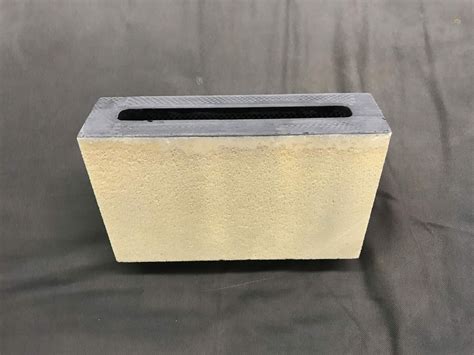
We’ve expanded the Tuttle masts for a couple key reasons - as beasho mentioned they are stronger and lighter, molds are less complex, layup stack extends right into the base… notice in other high performance segments - kite, windsurf, wing racing … plate masts aren’t competitive compared with Tuttle. You won’t see a single racer on a plate mast. There are lots of reasons for this and also very good reasons to stay with plate for downwing and surf… this is why we have to build both unfortunately.
In kite racing, there are essentially only a couple of foil models that are used, so it’s not too hard to design a board balanced around that fixed mast position.
In the open ecosystem we now have for surf/freeride foiling with seemingly opposite design choices of Forward (ex: Armstrong) vs very back (ex: GoFoil v2), without even mentioning evolutionary changes due to shortening fuses, shimming and various tweaks affecting optimal mast position, this is getting more of a mission to have a fixed position, or something with little adjustment without introducing hard incompatibilities and being locked in one system. At the moment, long tracks allow most foils to fit most boards. For the average Joe, that’s kind of priceless
As a code rider I have to applaud what sounds like a great system of foils you’ve come up with, keep pushing things forward and raise all ships
From my understanding these new tuttle designs offer quite a lot of adjustment. I wasn’t interested when they were fixed as that was too much to give up but you’re not losing much if anything with recent updates.
Yes great point! We’ve had to make our tracks longer to ensure that the other brands foils will work on our boards.
There are good adjustable Tuttle options now for rake and position. They are limited to about 50mm on position. For small increments custom shims have to be made.
How much lighter are we talking by eliminating a base for a mast? Is it worth it?
The drag is not important when on foil to me…so it’s not worth discussing.
Adjustability is also not important to me either as I haven’t moved my setup since purchase.
Stiffness is the big one. How much loss of Stiffness are we talking? Currwnt foils are designed to flex to handle stronger angles(fone) how much loss is the marshmallow absorbing. How much less of a turn am I missing out from attacking?
Up to 2 lbs. Considering the weight of your board, if its prone 8 lbs (?) that could be a huge percentage of the board (25%), and total weight of the rig. Alternately a 6 lbs board and Tuttle head would need to be 2lbs heavier with a 16” track system a 33% increase in weight.
See this. Measured weight of the Aluminum base as a proxy = 1 lb 6 oz or 624 grams. I suspect the carbon base is actually heavier. Add back 4 oz for a Tuttle Head to the top of the mast.
People have been invoking stiffness like it is a panacea. Yet there is NO DEFINITION of Stiffness when it comes to boards or box installation. First Principles suggest
There are only 3 axis to measure:
Pitch Stiffness
Roll Stiffness
Yaw Stiffness - Similar to Torsional
Stiffness should ideally translate energy from your body to the front and rear foils. This means your feet pass through
Booties (cold water foiliers)
Deck Pads - soft marshmallows that are installed on 98% of boards for comfort and aesthetic
Board Deck
Board Infrastructure - Beer Cooler foam, High Density foam (Divinycell), bulkheads, tracks
Board Bottom Panel
Rubber Gasket (Base Plate dampener - See below)
Base Adapter (Either Plate Mount or Tuttle Head)
Mast
Mast to Fuselage Interface
Fuselage
Fuselage Connection to Foil
–> Front and Rear Wing
Heaven forbid we talk about stiffness of the foils themselves.
Here is a simple upgrade: Remove the booties, Take off the Deck Pad (use wax) and Remove the rubber gasket on the base plate (2 mm) shock absorber shown below.
The best analogy I could come up with for the feeling of a tuttle is kind of like iceskating, rollerblading, or skiing with really thin socks and a well fitted boot - versus wearing multiple thick socks in a larger boot. It just feels more… “connected”? It’s a strange feeling.
I’m not sure it works like that. I don’t have all the forces worked out in my head but there is more going on than with non moving static set up where location would not matter.
The mast drag plays a part and the position between the front and rear rings I assume does something for stability.
You want the weight of the mast as close to the centre of rotation as possible.
Foil to mast position effects the turning of a foil. When you yaw (which you need to do to initiate a turn - similar to counter steering a motorcycle) the foil pivots around the mast. Pushing the mast back makes a foil feel more locked in.
Yeah but it’s weight in the least obtrusive place you can put it. If there was a way to make the nose of a DW board 2 lbs lighter it would make a lot bigger Difference. Honestly I feel like the plate/mast/foil weight is pretty low consequence. I think cutting 2lbs from your body makes about as much difference as 2lbs around the plate. The only time I notice the weight of my setup is when I’m carrying it to the water. - and I’ve ridden some heavy (full aluminum) and featherlight( NL mast with lift 120) setups
and in terms of adjustability - for prone I don’t “adjust” mast position EVER but it’s gotta be in the right spot and thsts never exactly where I expect it from the factory. The only way this would work for prone is if you had a plate board, rode it to find the spot, then ordered the exact same shape but in Tuttle. I think for big sups and esp DW shapes there’s a lot more fore aft wiggle room so you can probably get away with “ball parking” it but prone this would be a disaster.
Back at the top of the thread: Kane redesigned his mast to move the base plate just 1” closer to the center of Mass, to get more efficient pump, reduce swing weight. . . What would removing 1.5 lbs, aka take the entire plate away, do to his argument. That is what the advantage of the Tuttle is for Weight alone, not to mention all the other benefits.
Weight is weight. No performance oriented person would ever accept good enough. Not in rockets, race cars, performance race bikes . . . (what would they pay for a 2 lbs reduction).
There are two tests for stiffness that I am aware of.
First is testing bend. This can be done with an Instatron test rig. Second is yaw test.See below for picture of rigs. To experience yaw just ride behind a boat in the prop wash. You can find out just how little torsional stiffness a mast has. That translates to carving.
So when you argue a Tuttle is stiffer I would really like to see the data. Then I along with everyone else can decide whether changing all our gear is worth it. Please don’t use arguments like get rid of booties. I say if that’s where the discussion is then drop 5 lbs of body weight, ride a full carbon plate that sinks and place a binding system on board to increase stiffness.
Please compare apples to apples when stating a Tuttle is stiffer with test data to back it up.
we don’t need the industry forcing us to buy all new gear because a few racers want minimal performance gains that will not be felt by us mere mortals.
These tests test the mast, but not the connection system. For comparing different plate mount masts from different brands it will work well, but comparing plate to Tuttle it won’t.
For a true test rig you probably need to set up a section of board, constructed to the same specs with a Tuttle and a plate and measure the end deflection / yaw of the mast so you get a full picture. A whole lot of work.
I believe the test would be Tuttle box connected to Tuttle mast. So the question is how big is the carbon plate the box is mounted to. One of the failing of Tuttle early on was it literally was a box and would rip out of a board. Now that is something to ponder because most Tuttle do not really occupy vertical space in a board. They tend too be vertical and you only have about 4 to 6 inches at about 3 wide. A track plate occupy way more horizontal space (flat with board) and has similar depth to Tuttle. So just using this the Tuttle will not come close in stiffness. Again some detail along with images would be nice.
I have copied what I can find for Tuttle that I could find and also for track. Since we can rule out the board we are down to the track/tuttle and it’s occupied space and depth. I think we can all see that the track occupy almost twice the area horizontally and thus makes it much harder to flex.
It is not the industries forcing us. Its us (the foiling community) forcing the company. HaHaHa
Jondrum added a tuttle in between his track and said that was definetly feeling the difference. And he isnt a pro foiler. As far as I know.
The tuttle box is solid and run thru the entire thickness of the board to the deck. With a tuttle like system, the carbon fiber strands of the mast can then run in a straight line to the tuttle box. The carbon don’t have to bend outward at the plate. That must make a difference.
Sometime, we dont have data and the best we have is feel. Remember that we are mostly just regular Joes and can’t always have the time, the money or the interest to do reproductible test. Me, I’m quite happy to let the data crunching stuff at my day time job. But I also think that company should publish stiffness data.
Stiffness is not the only benefit, there weight gain and less drag at takeoff. Even if all of these caracteristic are just marginally better, its still 3 improvement over the track system.
This thread is really what foiling is about : breaking the status quo, talking about ideas and trying stuff. YEWW!
This is correct. ↑ This is a demand driven market at the moment. Long may it last.
On the idea itself, I feel like the current standard was completely arbitrary in terms of how it ended up being the standard, and I think this tuttle concept deserves being market tested.
Something someone said on here that stuck with me, paraquoting “you couldn’t design something more suboptimal from a stress / strain perspective than the track setup” I’d love to know who said that.
This idea from @Boogie is very cool, and plays on the Appletree idea.
Kite race boards are relatively thin. Tuttle heads for wing and down wind are ~42-46mm deep, so the board would have to be similar thickness unless you want a bump where the box goes. The boards also have to be designed for a high load right at the front of the Tuttle box.