I’m bummed none of these boards has an inspection port so you can stash a sandwich or something in there!
3 Likes
like a “snack hatch”…hmmm…what creative term could we use for that…
2 Likes
These numbers are off by 2X. EPS foam that we are using for building boards is just 0.90 lbs / cubic foot. @ 115 liters this would add to 3.65 lbs or 1.66 kg. Pretty darn light and hard to compete with for a hollow board.
The surface area is actually much higher than your estimate. Here were the metrics on my last build a 128 liter downwind shape. I measured all inputs to the 1/10th of a gram. This board was targeted to have a single lamination layer because it was an XPS core and therefore the lamination was designed to keep the foam from flaking. This board had 4 yards^2 of material @ 1 lamination layer. A hollow board would require 2 layers, maybe more. And then a few layers of goop to make it look good . . . .
The math doesn’t add up for a hollow board to be lighter than this garage version that I built out of Home Depot foam a year ago. But prove me wrong and build one.
The Gold Standard for a Custom design by a Professional Builder is 10 lbs / 100 liters. That was stated by the Flying Dutchman years ago. A crazy light design would be 9 lbs / 100 liters.
This board, the Orange Crush, was 8.3 lbs / 100 liters when completed. The board has lasted 250 sessions and is ready for another summer.

4 Likes
These guys are claiming 3.9 kg for a 104L hollow. That’s quite a bit better than the numbers from KT and starboard. I have not seen any of these boards though so no idea if the claims are real.
Still no orange crush though!
Airinside are at least 20y+ building hollow windsurfboards and are legit.
Most boards come out the exact weight they claim or a few grams lighter depending on the paint. Haven,t tried there wingfoil boards but had back in the days a windsurfboard from them and that was very stiff and strong.
I wasn’t trying to imply that they’re not legit. I just wanted to make it clear that i had no first hand experience with the brand. I’m very intrigued by their low weight numbers. My main issue is that their board designs look a bit dated
I think that is the issue with hollow board for builders, by the time they create a design, invest money on multiple molds then actual production, the board shape might be outdated. Especially with DW board designs, where it’s still changing.
I’m wondering how many boards they will need to sell before they break even on their mold cost. Also it will be pretty cool to see the internal structure of a hollow board.
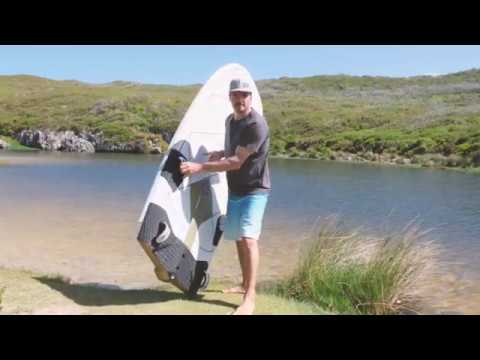
Yeah, I’ve been following Airinside since Patrik showed the hollow windfoil board on youtube channel 5 years ago. This is legitimately the lightest possible way to make a reasonably durable board - one-shot molded prepreg carbon with nomex honeycomb core. Beasho, Looks like they almost exactly match your weight per liter. I think a heck of lot more durable though

2 Likes
I know its early, but still looking for non-sponsored reviews of the new Apple Skipper DW V2…anyone?
Anyone else look seriously at it? Thoughts?
1 Like
To add some more info here: I’m not sponsored - but was offered an early copy at a discount - so take that how you will. The new shape is a massive improvement over the V1. I have ~8 13 miles sup runs in the bag in varying conditions, and a bunch of wing sessions on it: https://youtube.com/shorts/ZWk6qHX2IuE?si=YACn1mwBT_W93XwA
I also own an Armstrong DW performance 8’11 108L. Last year I was using the Armstrong when I wanted easier paddle-ups (over a 7’3 100L V1 Appletree), but I haven’t not felt the need since I got the V2 Appletree despite it only being 100L (which is on the small side for my 85Kg in fresh water). The Armstrong is still easier to paddle up (thinner, longer + more volume), but the Appletree’s dims (7’7 x 18) are more fun on foil. I would expect the designs to work equally easy at the same dims.
That said I haven’t had any issues getting on foil even with very poor wave timing (on the Lift 130 here): https://youtube.com/shorts/zm_X82--Dqc?si=F0NSfx_lty2ejewC
Hope that helps
1 Like
I’ve got an Appletree DW V2 7’8" x 18, 105L on the way. Will post my thoughts, once I’ve had some SUP DW sessions on it. It replaces my V1 skipper DW 7’7" x 20, 110L. Not sponsored, no bro deals…
1 Like
Looking into getting my first SUP board for primarily for surf right now, but plan on transitioning into DW in the future. I’m a 75kg intermediate prone foiler on Oahu with zero SUP background. Been looking at some boards with different dims and really not sure what’s the best route to go.
From reading around, it seems like 8’ x 20" 115L would be good for me maybe?
Some options locally right now:
Totally different direction. Don’t hear about this one much.
Also the Barracuda Mini Cuda V2 has a good sale right now.
7’6" x 20 x 110L
Can anyone provide some suggestions?
I’m a similar weight to you (70kg) but with a bit of sup surf experience under my belt I ride a 6’10 x 20 95L board and I feel it surfs significantly better than my other 7’10 x 19.5 110L board. I also use this board for parawing (which will be my main method of downwinding)
Having said that if I was mainly doing paddle downwinders I’d be on the 7’10 (probably longer if I had one)
I’d say your 8x20 115L is a pretty good starting point (shorter if you’ll be surfing more, longer if you think you’ll be mainly downwinding)
I don’t really like any of the options you posted though
1: Too many litres it’ll be corky
2: Too wide won’t be much fun downwinding
3: Would be good for sup surf still probably on the short end for beginner downwinder
1 Like
Thanks. This helps a lot with the general dims search. I don’t think I’m looking for a board that’s going to excel and any one thing, more like a skill building board. I’m planning on:
- Build basic SUP skills on flat water
- SUP surf to improve further and take advantage on small days
- Work toward downwinding
- Possibly experiment with parawing
I know nothing about these different foiling disciplines (besides prone skills), but I was hoping there’s dims that would do a not bad job at learning the basics of all of them. I can specialize later.
Whilst I’m more a SUP surfer than downwinder, I’d say at the earlier stages “you can make a downwind board work in the surf, but it’s harder to make a surf sup work on a downwinder”
So as a one board quiver I’d probably sacrifice some surf performance and add that extra length to make the downwind side easier.
8 Likes
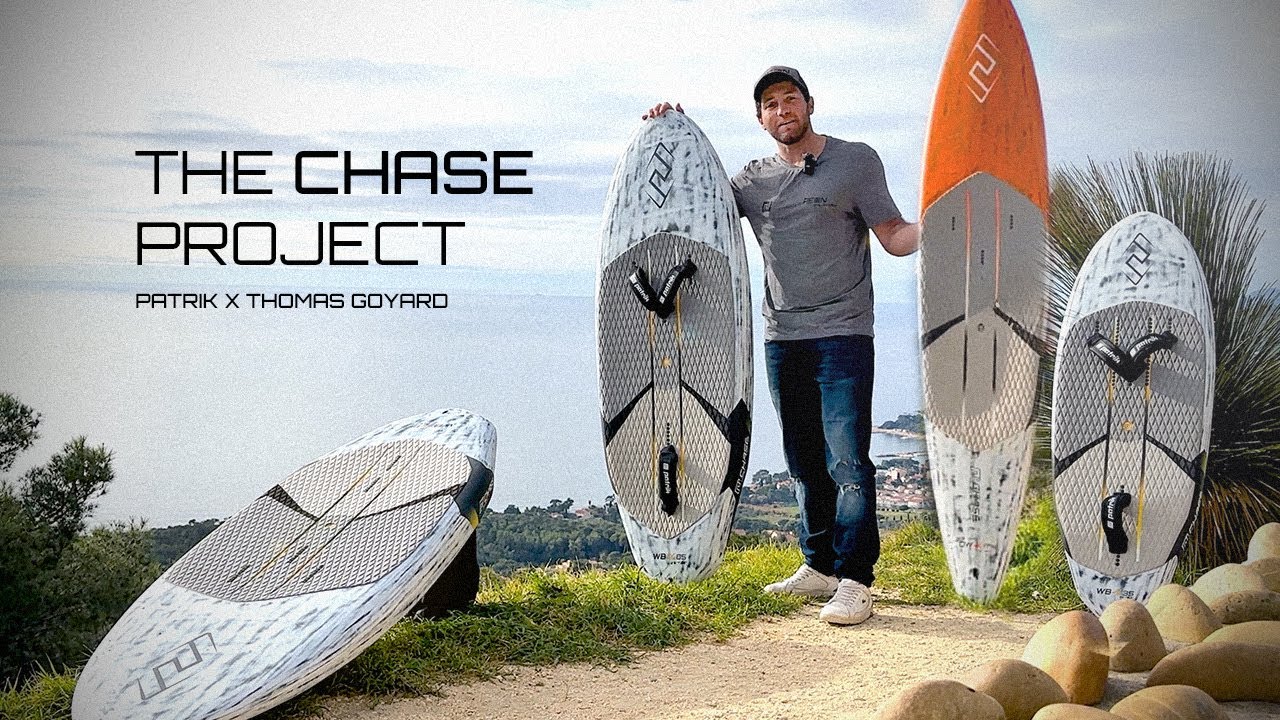
A good recipe seems to be windsurf construction and design, here is PATRIK, with Thomas one of the best of the Europeans.
I wonder what the optimal nose shape is for a board to be stable and reduce drag?
It must be a symmetrical airfoil shape? You don’t want lift or downforce, just minimal drag. Trick is that it needs to be the same on both sides.
Or you have a true airfoil (asymmetrical), and you have a “going right” board for North shore and a going left board for South shore?
A lower volume, faceted nose for better aerodynamics when cutting across chop and sidewind.
It holds the same pop and recovery the Flying Cat is known for, but feels noticeably cleaner, faster, and shaper when conditions get tough and the wind is high.
You live in Hawaii. You have multiple options.
Boards are cheaper over there because there are so many.
Get an older cheaper possibly wider one to build up your sup skills. Then sell it for a newer faster narrower one to continue your downwind journey.
You also have great shapers there. talk with Jimmy lewis for example and have him make you one.
1 Like
My new Appletree board arrived a couple weekends ago, and I went to Hood River to go pick it up. Then I had two pretty nuking days and excellent runs to dial mast position, and get familiar with the board. Big differences: the new V2 (which is actually more like V3, as the “narrows” which came out in 2024 were a second iteration, IMO) has significantly more rocker, harder-chine rails, more reinforced rails, lighter board weight, slight ly recessed deck, and tracks positioned further forward.
My last board was an Appletree 7’7"x20, 110L. New board is 7’8" x 18, 105L
Conditions: I lapped a couple Swell to Basement runs to dial things in, then the rest of the two days did tunnel 5 and 4 runs to Basement. Big, classic HR conditions 25-30kts bumps were waist to chest and pretty clean except at Swell-to-Hatch where they were chest+, breaking, and a bit more chaotic. Even the really good riders were commenting on the intensity of the conditions there.
I spent one run with the mast too far forward, ended up liking the mast where it balanced, with the foil supported by fingers 1/3 the way back from LE and board level.
Used a 1050 first run, then switched to 850 for the rest.
Traction pad is horrible (very slippery) with Solite booties, but great with bare feet. So, for winter DW I’ll need to remove their pad at the two foot positions, and replace with better.
I felt like, because of the extra rocker, and majority of volume (thickness) at standing area, there was a tendency to pivot more, as I was getting going, than my last less-rockered board. I weigh 75kg, and probably should have shot for high-90’s in volume to sink the board down a little more. If you’re considering ordering one of these boards, make a good choice with board volume.
Adjusting to the new width didn’t seem to be much of an issue, and the board rode and felt great on foil. Touch points and swing weight were great, never noticed anything I didn’t like.
I lost my balance getting into the water on one of my tunnel runs, and fell ON the board, ON the rocks in about 10 inches of water. Not much damage done, but I really appreciate the closed-cell foam construction of these boards, as you can just “fix it later” with no worries.
The slightly recessed standing area also felt quite good to me, and was something I had wished the last board had. The width didn’t hold me back from fairly aggressive carves, when speed and wave shape allowed (at my skill level).
So, all-in-all, I’m super happy with the board, an look forward to gaining more time on it for flatwater, and I more varied conditions for sup DW.
4 Likes
A bit of Wax on the pad would probably help with your boots.