I’m assuming I’m not the only one whose experienced “speed wobbles” similar to loose skateboard trucks on a hill ? Typically with high acceleration and or turbulence. Doesn’t always end in crash, but not fun. I specifically noticed it on an 925 (not the stiffer mast) and also on a 1095 with a non shimmed front wing / fuse connection.
torsional stiffness test made me think of that because when the wobble starts it feels like twisting back and forth vs the mast bending.
Yeah speed wobbles are beyond me, I’d guess some resonance from some mysterious source, and maybe separate from rigidity?
I was trying to come up with an easy torsion test, and the best I could come up with was tracing the laser on a sheet of paper before and after hanging a weight in the foil, and measuring the difference with a protractor. But this time mast horizontal, fuse vertical. Still doing it for various parts of the system.
Yes with the big slower Axis wings (1150 and 1300) on the longer alu mast it became very noticeable, less so on HM which I think is an important note: torsion probably more difficult to pin down and measure but huge impact on big span stability, which I think @McD gives some guidance on.
Also seems sensible to do a few weights from 10-50kg to plot any non-linear flex type stuff?
I recently got both the 75 and 85 takuma carbon m8 masts, and using this test found that the fuse/mast connection was LESS stiff than both m6 and cedrus+axis. I checked the mating surface on the end of the masts and sure enough they are convex, so I sanded it flat. Laser movement before/after: 5.5/~0.5
Still tying to secure more brands even for a few minutes to test. Everyone is always using them!
I’m starting to realize that connection fit is possibly more important than flex. I’ve got a takuma 980 on a tBar mast - a setup that is notoriously terrible - and i find it totally serviceable once bonded - and i’m a rider notorious for my focus on stiffness.
What i’m doing these days for takuma wing fuse connections is a semi bond. The goal is to have a perfect connection fit with epoxy, have some kind of a bond(to take some load off the mechanical connection), but not for it to be permanent(so i can sell it if i want to). I’ll spray the inside of the wing connection(female part) with release agent since thats the side that’s hardest to clean if the epoxy were to bond there and come off the fuse. Then i coat the male part with the epoxy - you want all the bearing surfaces to have contact and for it to be sealedbut not displace the air at the bottom of the connection(aides in later disassembly) I want the epoxy to stick to the fuse so i sand and prep that with acetone to get a good bond there. Then i let it cure and don’t take it apart ever.
I’ve got a 1210 set up on a custom fuse cedrus setup also. I’d say for aluminum/carbon connections this is essential as that electrolytic corrosion is a MFer.
If your a 1 or 2 (do you really need a dozen wings) foil rider it totally makes sense to leave your foils assembled and have the connections semi bonded. Also, if you take your foil apart your wearing out those connections. They’ll definitely get looser over time.
If there’s movement in connections it will get worse - like an ill fitting wrench on a bolt it eventually rounds off. Taking out that movement and eliminating the play definitely preserves the longevity of the equipment!
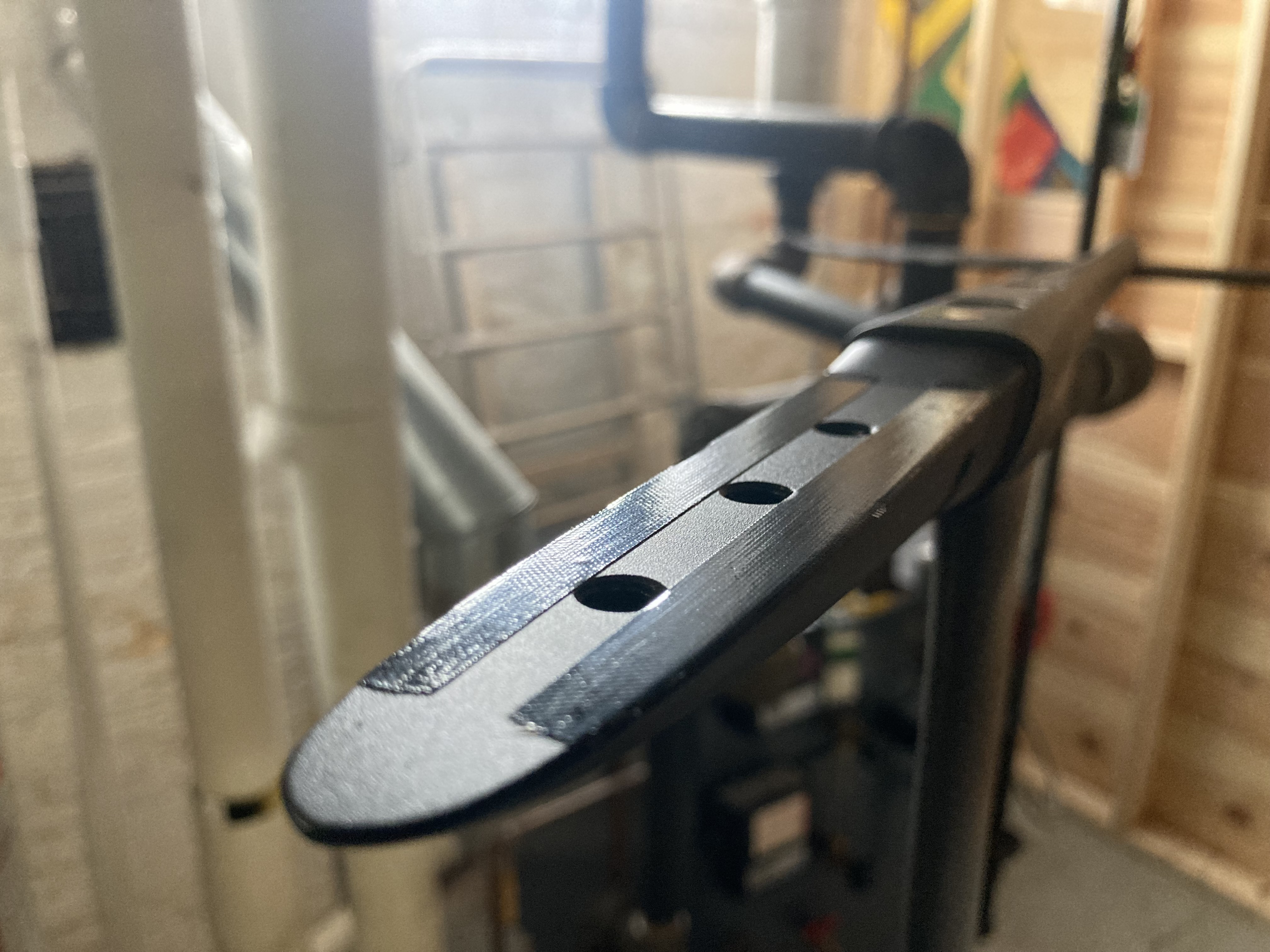
I received a pair of kujira 2 foils with their fuse, and gave it this test. Like the end of the new masts that aren’t dead flat, the mating surface between the fuse and the foil isn’t flat either. It’s rather amazing that they haven’t figured this out but there it is. Takuma is great if you like mods: I took the two provided strips that came with the K1 m8 fuse, and applied them to either side of the holes and trimmed the excess. Flex improved but probably would more with foil tape since this tape isn’t made of metal.
That said I got to try them prone this morning, and dang, very nice. From what I could tell the 1400 turns like the 1210 and glides like a 1099. But I digress.
I was looking at this cutout in the bottom of the k2 fuse, and it made me think about how I’ve been getting inconsistent readings of the mast/fuse connection. I think it’s because every fuse has very little material around the mast allowing it to flex around it. When I mount the laser on the tail, it measures how much the fuse is moving at the connection, and is very slight, but if I clamp it to the fuse next to the mast, some amount of that flex shows up. Also, when I measured a cedrus connection with an adapter, it was the same as a takuma mast without it, which tells me two flat surfaces bolted with m8 don’t move, therefore: why have the mast enter the fuse so much? Keep the fuse thick, with a flat mating surface on the top. You could even have one or more extra holes to change where the mast connects like axis advanced, because there’d no longer be a giant canyon in the fuse.
Fone mast to fuse connection is a T shape with 3m6. As long as the bolts are tight a flat interface works just as well. Cedrus flat connection with m8 is also perfectly functional.
Yet quite a few brands go for that socket in the fuse, which adds thickness to the connection and various complications/flex issues. Why choose a socket in the fuse instead of a flat/T connection?
Socket is necessary for carbon because aluminum has a much higher compression strength and can take that bend load in compression alone. Carbon needs more surface area to deal with those loads so they do the socket to get more surface area than just the mast footprint
Yeah. Also f one is expanding that surface area using that connection. I know a subjective “feeling” assessment is against the nature of this thread but when you grab the connection with your hand and torque the wing with the other do you feel a creak or wiggle in there? Hearing the creak is also a valid data point. I’ve never put hands on f one personally.
Also it’s nice to know what flex is in parts(and which part) vs connection “movement” which I feel like doesn’t have that nice flex return response and is less consistent. Probably more of a deal breaker than flexing carbon.
Yeah your rig stiffness is only as good as its weakest point, and if anything, a flexy but homogenous rig is more predictable than a stiff setup with one weak connection point.
For example I use cabrinha with a high modulus mast but I can feel the flex in the wing itself as they just put regular carbon with probably not the best layering there.
Takuma has always felt unsafe as both the fuse and wing connection bring some random wiggle when you want it the least.
I have been fairly impressed with fone, high mod carbon from the board to the wing tip with stiff connection points, you can definitely feel the gain in overall stiffness and more control compared to other rigs. Its stiff throughout the whole chain.
Pushing on the wing tip with hand on the fuse connection it does not move at all. If you push hard maybe you can feel a little bit around the front bolt area where there is the most torsion forces applied, but barely anything.
I noticed a lot of movement coming out of my Ali base plate to ali mast connection.
Was able to solid up that connection with .008 brass shim stock.
Crazy how sloppy a lot of these connection points really are.