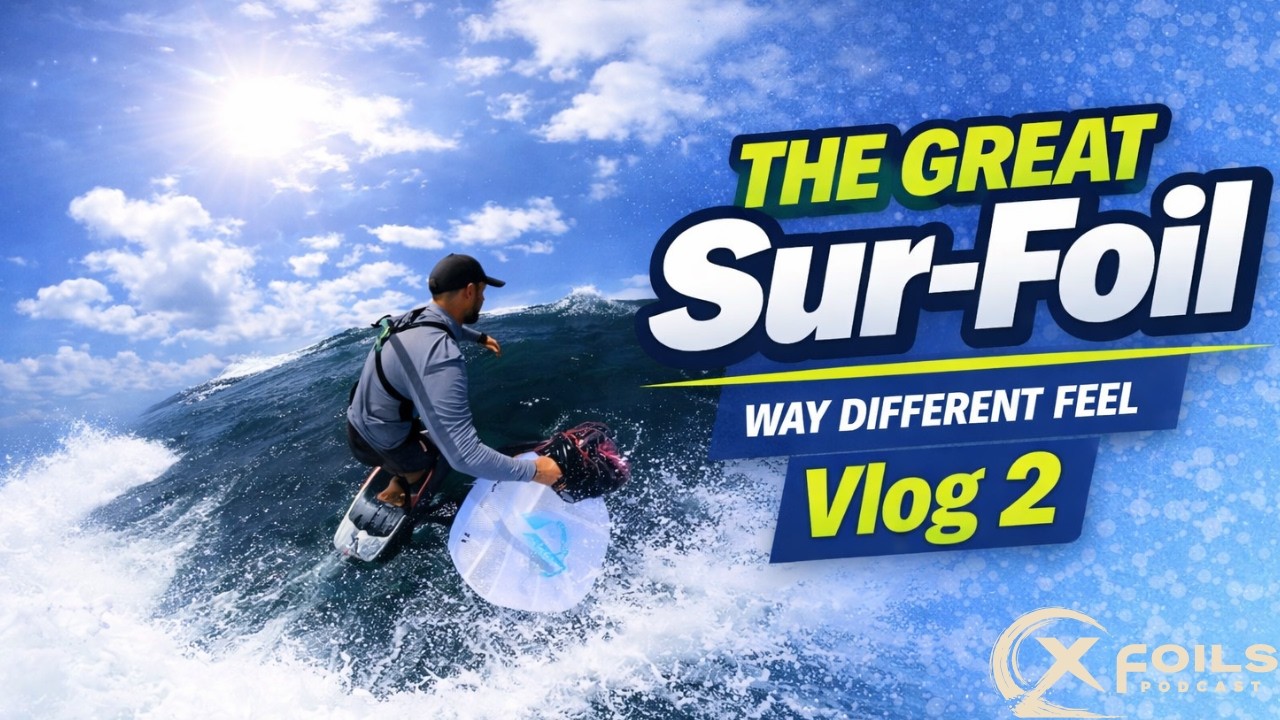
Have not tried anything larger. Heard the wing span is a bit much on the large sizes. The up wind is decent, not as good as the PR or frigate. but almost.
Thx a ton…holy hell, I would have never figured that out on my own… it’s a lot like counter steering a mountain bike (or that’s how I’m making sense of it)
I ordered it, but I haven’t got my hands on it yet. My thinking is that in it’s smallest size the downsides of they hybrid should make little difference.
On gybes, what are people having the most success with when foiling speed > wind speed? I tried the handle-pass for the first time last session, and had a lot more success with that than a “normal” gybe.
I’ve had a few sessions on the f-one quest 3 and 4 now. The bar is a big upgrade compared to the frigate. Stashing and redeploying is also easier and more consistent. When depowered, the canopy keeps its shape, and the upper wind range feels better than the frigate.
It might point a few degrees less upwind, but it’s difficult to tell how much. It also feels a bit slower in heineken jibes, although that could just be me being bad at wing handling.
Overall, a really solid parawing. It seems to deliver pretty much exactly what f-ones marketing claims.
Just had my first session on the Ozone Power Pack (3.6m), what an awesome, fun parawing!
Coming from the v1 Pocket Rocket, hand placement for water starts takes an adjustment, but everything else is just easier: launching, stowing, and line management. As expected, it doesn’t surge to the edge of the window, so comes with less upwind drive.
This wing is so easy to jibe, and sitting deeper in the window, is incredibly hard to stall. You can even redeploy it the wrong way and still tension it into a turn. On waves, it reminds me of that kite-foiling era of working small, stalled kites deep in the window (e.g. Cloud / Reo style).
For quick laps, this is my new favorite. Despite being positioned as advanced, I actually think it’s a better starting point for new parawingers. It’s so simple to relaunch that I felt totally comfortable sticking jibes and tacks right in front of a rock wall.
Got to test the absolute top end of the F-One Quest 4m today
25kn gusting to 33kn. At 70kg I was holding on for dear life and it wasn’t pretty but to it’s credit it stayed pretty composed flying purely of the A’s and still got me upwind when needed.
Dumb beginner parawing question. Are folks able to hold a 90deg reach or even make slight upwind progress when wind dies so low that you can’t get on foil? Like taxiing standing on the board or on a low volume board sitting or kneeling. Or is it only possible to make downwind progress ?
essentially, can I plan to go out at a launch with minimal to no downwind exits and not worry about wind dying like I could with a wing?
When learning, I would say no. Up until recent, I would always drift downwind if not on foil. But this week the wind died for a while, and I noticed I actually managed to go upwind a bit. Standing on the board.
What’s actually changed? Don’t know. Probably just better finesse with flying the thing.
If you are using a PW that has a higher AR and is touted to “go upwind” you’ll have a fighting chance. I could do what you are describing on the Flysurfer POW 5.0
The PWs that are “rapid stash - surfing” oriented need to be at the top end of their range to go upwind. The Ka’a and Power Pack are in this group.
Not a dumb question at all. If you’re learning I’d say find another location until you get the hang of it. At least for the first few sessions until you’re on foil. Are we talking cliffs past the launch site? The thing is with the wind is that it is unpredictable - worst case scenario- it dies or you have a massive tangle & you drift slightly downwind then picks up again when you’re too far past your launch site. You may not be able to get back. Like learning to wing, the walks of shame are an expected consequence.